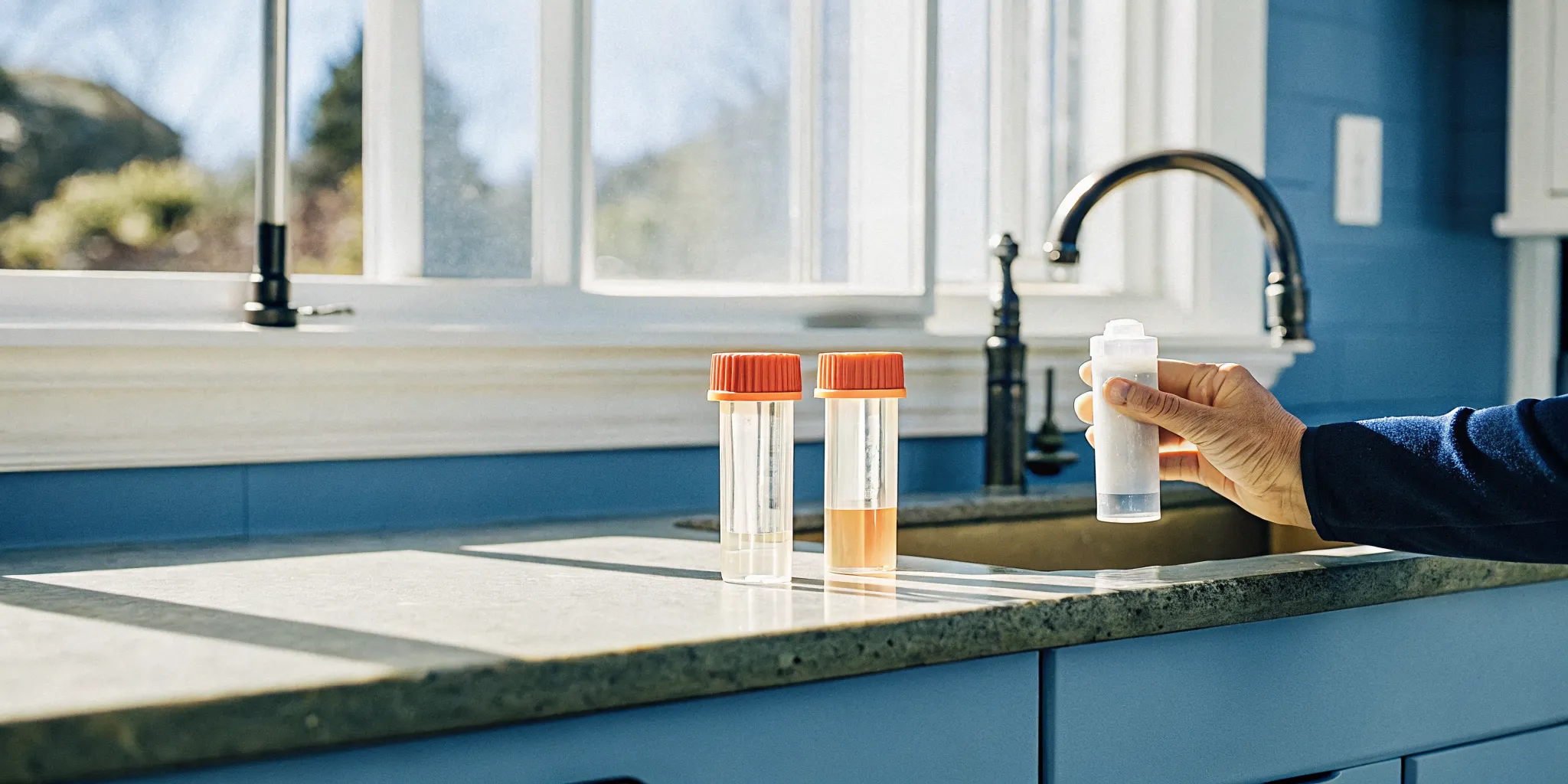
Iron bacteria vs iron in well water describes the difference between living organisms and common mineral deposits found in Minnesota wells. Iron bacteria are small organisms that combine iron and oxygen to create a thick, orange slime that clogs pipes and coats fixtures. This differs from dissolved iron, which looks clear in a glass but turns red after sitting, or oxidized iron, which appears as red particles immediately. According to the Minnesota Department of Health, these bacteria are not a disease risk but can lead to severe plumbing issues. A standard water softener can remove low levels of dissolved iron, but it cannot kill bacteria or remove the heavy slime they leave behind. You must treat iron bacteria with shock chlorination or specialized filtration to prevent recurring odors and damage.
Iron bacteria vs iron in well water: the quick comparison
Iron in well water often takes two main forms. You might have iron as a mineral or as a living thing. While both can turn your water orange, they have other causes and need other fixes. Most Minnesota wells have some iron, but the way it acts in your pipes depends on which type you have.
Finding iron as a mineral
Iron minerals often enter your well water from the soil or rock. This type of iron is not alive. It often shows up as dissolved iron, which is clear when you first pour a glass. Once the water hits the air, it turns into rust and leaves orange or reddish buildup on your sinks.
Mineral iron can also cause a strong metallic taste in your drinking water. High levels of these minerals often lead to stains on your laundry and plumbing parts. The Minnesota Department of Health says iron can also come from rusty pipes or the well casing itself. This form of iron is common, but it does not create the thick slime found with bacteria.
Spotting iron bacteria symptoms
Iron bacteria are small living things that feed on iron and oxygen. These organisms create a sticky slime that can be red, brown, or grey. You might see this slime in your toilet tank or on your well screen. Unlike mineral iron, these bacteria often cause a bad smell that reminds people of a swamp or sewage.
While they do not cause disease, iron bacteria can make it easier for other harmful pests to grow in your well. They can also clog your pipes and lower how much water your well can produce. The Minnesota Department of Health notes that these bacteria are often found in soil and shallow groundwater. If you see a rainbow-like sheen on top of the water, it is a common sign of an iron bacteria bloom.
Why looking is not enough
You cannot always tell which issue you have just by looking at your water. Both iron types cause stains and cloudy water. A simple sight test might lead you to buy the wrong filter or treat the wrong problem. Living bacteria need a new way to fix them than simple mineral buildup.
The best way to know for sure is to test the water. An expert test finds out just what is in your well and how much is there. Loon Lakes Water Systems offers a way to Schedule Free Water Testing to help you find the right path. This step ensures you get the fix that actually works for your home.
| Feature | Mineral Iron | Iron Bacteria |
|---|---|---|
| Cause | Rocks and soil | Living things |
| Texture | Sandy or flat stains | Sticky or stringy slime |
| Smell | Metallic or none | Musty, swampy, or sewage |
| Impact | Stains laundry and parts | Clogs well and plumbing |
| Detection | Water test | Water test and slime check |
What dissolved and oxidized iron look like
Iron comes in a few forms when it is in your water. Most well owners in the Twin Cities deal with two main types. These are dissolved iron and oxidized iron. Knowing which one you have is the first step to clear water. You can schedule free water testing with us to find out for sure.
The ghost of clear water iron
Dissolved iron is often called clear water iron. When you pour a fresh glass from the tap, it looks perfectly clear. You might think your water is clean. But when this iron hits the air, it changes. This is because the iron minerals in your water turn to rust when they meet oxygen, according to the Minnesota Department of Health.
This type of iron is a sneaky problem. It stays hidden until it stains your sinks, tubs, and toilets. It can also make your water have a metallic taste. If you see orange or reddish buildup on your white fixtures, you likely have dissolved iron. It is one of the most common issues for people with iron in well water across our state.
The visible threat of red water iron
Oxidized iron is different because you can see it right away. It is also called red water iron. This iron has already met oxygen before it leaves your tap. The water might look yellow, orange, or even red as it flows into your sink. This form is basically tiny bits of rust floating in your water supply.
You might notice sediment at the bottom of a glass or in your toilet tank. This grit can clog your pipes and wear down your appliances over time. Both types of iron can cause deep stains that are hard to scrub away. They can also affect how your food and drinks taste. Testing helps us see if you need a simple filter or a more robust system for your home.
What are iron bacteria in well water?
Iron bacteria are small living things that grow in your well and pipes. They are not the same as the iron minerals that wash into your water from soil or rock. While most iron is just a mineral, iron bacteria use that iron as fuel. They eat dissolved iron and oxygen to live. This process creates a thick, sticky waste that can cause major headaches for homeowners.
Knowing the difference between iron bacteria vs iron in well water helps you find the right fix. Most people notice iron when it leaves orange spots on clothes or sinks. But when bacteria are involved, the problem goes beyond simple stains. You will likely see a thick slime that clings to your well pump and pipes. This living growth is what sets these bacteria apart from common iron minerals.
The difference between iron and bacteria
Regular iron is a mineral that dissolves into your water from the ground. It is common in our area, where about 90% of private wells contain some iron. This mineral often stays hard to see until it meets air and turns into rust. Once it rusts, it creates the orange tint people hate. It can make your water taste metallic, but it does not grow on its own.
Iron bacteria are different because they are alive. They take the iron and turn it into a messy biofilm. This biofilm is a sticky substance that can be orange, brown, or grey. If you see a thick orange or reddish buildup in your toilet tank, it is likely iron bacteria. Testing is the only way to know for sure which one is in your system.
Signs of growth in your well
Common signs of iron bacteria include strange smells. Homeowners often describe these as musty, swampy, or like rotten plants. These odors happen when the bacteria grow in large clumps. You might also see an oil-like sheen on the water surface in your toilet tank. This rainbow sheen looks like a small oil spill but is a sign of the bacteria at work.
The slime itself is another clear sign. It feels sticky and can look like stringy pieces of rust. Unlike regular rust, which is often a fine powder, this slime is thick and hard to wash away. It can build up on well screens and inside pipes. Over time, this growth can slow down the flow of water into your home. It can even lead to a loss of water pressure if the build-up gets too heavy.
Why iron bacteria causes plumbing problems
The biggest issue with iron bacteria is the damage it does to your equipment. The thick slime can clog your well pump and shorten its life. It also coats the inside of your pipes, which makes it harder for water to move through them. If you have a water softener, the slime can foul the resin and make the system less effective. This leads to more frequent repairs and higher costs.
While these bacteria do not cause disease, they can still be a risk. The slime can provide a place for other, more harmful bacteria to grow. That is why the Minnesota Department of Health suggests testing your well if you see these signs. Regular cleaning may be needed every few months to keep the growth under control. Testing helps you decide the best way to protect your well and your home plumbing.
How can you tell which iron problem you have?
Finding the cause of stains or smells in your home can be hard. When you look at **iron bacteria vs iron in well water**, you might see the same signs like orange spots or a bad taste. Both issues are common for Minnesota well owners, but they need other tools to fix. To find the right path, you must look closely at how the water acts in your home.Look for visual clues
Start by checking where water sits for a long time. Clear water iron is hard to see when it first comes out of the tap. It only turns orange or red after it touches air and sits on your sink or tub. If you have iron bacteria, you will often find a sticky orange or reddish buildup. This slime is a big sign of a living problem in your well rather than just old rust. As shown by the Minnesota Department of Health, these bacteria create a slimy stuff that sticks to your pipes and pumps.Smell the difference
The scent of your water is one more helpful clue. Most iron issues give water a sharp, metal taste that is easy to spot. But iron bacteria often bring a much stronger smell. You might notice a scent that reminds you of sewage, rotten eggs, or even swampy water. This happens because the bacteria feed on iron and leave waste behind. If your water smells like a metal penny, it is likely just iron from rocks. If it smells like a wet dog or old earth, you might have a germ bloom.Follow these steps to check your well
You can do a quick check at home to see what might be in your water. While these steps do not replace a full lab test, they help you find facts for a pro.- Open the lid of your toilet tank and look for thick, stringy slime.
- Fill a clean glass and check if the water is clear or cloudy right away.
- Let a glass of water sit for a day to see if orange flakes fall to the bottom.
- Note if you see a rainbow sheen on the surface of your water.
- Call a local expert to confirm the results with a real test.
Why testing changes the treatment plan
You may see orange stains and think you need a standard filter. But the cause of those stains matters more than the color. Without a real test, you might buy a system that cannot handle your exact water issues. We use a "test first" way to find out what is in your well before we make any plan.
A full check looks at what is in your water. This includes how much iron is there. We also check your flow rate to see how much water your home uses. These facts help us size your system so you never run out of clean water. A water test makes sure the plan we build fits your home and your budget.
Water levels and flow
What is in your water shows which tools will work best. For example, some filters need a set pH level to catch iron. If the pH is not right, the iron will stay in the water and pass through the tank. We also look for other things that might stop a standard filter from doing a good job.
Flow rate is another key part of your plan. Some systems need a high flow to wash out trapped dirt and rust. If your well pump is small, a large filter might not clean itself well. This can lead to clogs and low pressure in your home. We use your test results to choose water treatment products that work with your pipes.
Iron bacteria vs iron in well water
Living things like bacteria need a different path than plain iron. If you have iron bacteria, you may see an orange or reddish buildup that feels like slime. The Minnesota Department of Health says these things create a thick slime that sticks to pipes and pumps. Simple filters often fail when bacteria are there because the slime coats the parts too fast.
The fix for iron bacteria often needs more than just a filter. You might need a system that uses air or a chemical like chlorine to kill the bacteria first. Some wells might even need a deep clean every year or two to stay in good shape. Knowing the truth about iron bacteria vs iron in well water helps us build a plan that solves the problem.
When we test your water, we also look for other things like hardness and odors. If your water smells like rotten eggs, we add a fix for that too. Our goal is to give you a clear choice and a system that lasts. We want you to have great water without the stress of guessing what you need.
What Minnesota well owners should watch for
Owning a private well in Minnesota comes with a set of local water tasks. Most wells in our state contain some level of iron. In fact, about 90% of Minnesota wells have it. While iron is common, the way it shows up can vary. You may see clear water that stains your sink, or you might find a thick slime. Knowing the difference between iron bacteria vs iron in well water helps you pick the right fix.
Signs of iron bacteria vs iron in well water
Mineral iron usually comes from soil or rock. It seeps into the water as it moves underground. You might not see it when you first pour a glass. But once the water hits the air, it turns orange. This can leave marks on your clothes and tubs. High levels of this metal also give your water a sharp, metal taste. You can learn more about what causes orange or reddish buildup in your home.
Iron bacteria are not the same because they are living things. These small pests feed on the iron and oxygen in your well. They often leave a sticky slime that can be red, brown, or grey. You might find this slime inside your toilet tank or on your well pump. Unlike plain iron, these bacteria often cause a bad smell. Many people say it smells like a swamp or rotten plants. You may also see a rainbow sheen on the surface of the water.
Why testing is vital for well health
You should test your well once a year to keep it safe. The Minnesota Department of Health notes that iron bacteria do not cause disease. However, they can create a place for other pests to grow. A thick layer of slime can also hide harmful coliform bacteria or nitrates. Testing tells you exactly what is in your water so you can act.
Testing also helps you find the best tool for the job. A standard water softener can handle some iron. But if you have iron bacteria, you may need a different plan. These bacteria can clog up pipes and screens. This can lower the flow of water to your house. A pro test looks at the type of iron and the amount of bacteria. This leads to a fix that lasts longer and works better.
When to seek professional help
Watch for changes in your water during the spring and fall. Heavy rain or melting snow can change how your well works. If you smell something new or see a change in color, it is time to call for help. Do not wait for your pipes to clog or for your water flow to drop. Early action can save you from big repair bills later.
Our team takes a look at your whole system before we suggest a fix. We use a "test first" method to find the root of the problem. This ensures you do not buy a system you do not need. If you have concerns about your water, you can Schedule Free Water Testing today. We can help you know your test results and find a local fix that fits your home.
Common mistakes when diagnosing iron problems
Many folks in our state see orange spots on their sinks and buy a new filter right away. This seems like a smart move, but it often leads to spending money on the wrong tool. The main reason is that iron bacteria vs iron in well water are not the same thing. One is a bit of rock while the other is a tiny living thing. You must know which one you have before you can fix it.
Judging by stain color alone
A big mistake is thinking that any orange stain is just iron. Both iron and iron bacteria can leave an orange or reddish buildup on your sinks. If you only look at the color, you might miss the true cause of the mess. Iron often comes from rocks and soil deep in the ground. But iron bacteria use that iron to grow and spread.
Guessing the cause from odors
Another error is trying to find the problem by smell alone. Many well owners think that a bad smell always means they have sulfur. But iron bacteria can make many scents. They can make your water smell like a swamp, a musty basement, or even oil. As the Minnesota Department of Health says, these smells are a key sign of a bacterial issue. If you treat for sulfur but have bacteria, the smell will stay.
Overlooking signs of slime
People also forget to check the feel of the buildup in their homes. Pure iron usually leaves a sandy or dusty stain. But iron bacteria make a sticky slime that you can find in your toilet tank or on well parts. This slime is often:
- Yellow, brown, or grey in color.
- Sticky or stringy to the touch.
- Clumpy or like a wet rug.
If you find this mess, you are likely dealing with living germs rather than just high iron levels. This slime can clog your pipes and even lower how much water your well gives you.
Do not try to fix these issues by guessing. Fixing the signs without knowing the cause is a waste of cash. The best path is to Schedule Free Water Testing to get a clear answer. A pro test will show you just what is in your water. This helps you pick the best way to get clean, clear water for your home.
Frequently Asked Questions
Is it safe to drink well water with iron bacteria?
According to the Minnesota Department of Health, iron bacteria are not known to cause disease in humans. While the water is safe to drink, these organisms create a thick slime that can harbor other harmful pests. The bacteria also cause bad smells and tastes that make the water unpleasant to use. Testing for nitrate and coliform bacteria is the best way to ensure your well water is truly safe for your family to drink.
Can shock chlorination permanently fix iron bacteria?
Shocking a well with chlorine can kill a bloom, but it is rarely a lasting fix for iron bacteria. These organisms often live deep in the soil or within the well screen where chemicals cannot reach them. Research suggests that treatments may be needed every six to 24 months to keep the growth under control. Most homeowners need a long-term plan that uses regular cleaning and a special iron filter to keep their water clear and odor-free.
What does iron bacteria look like in a toilet tank?
Inside a toilet tank, iron bacteria often appear as a thick, stringy, or fluffy slime. This growth can be rusty, brown, or grey in color. If you touch the side of the tank and it feels sticky or oily, you likely have a bacterial issue. You may also see a rainbow-like sheen on the water surface. This is a common sign of these organisms according to Minnesota health officials.
How do you remove iron bacteria from well water?
Fixing these issues takes many steps because the bacteria create a thick slime that resists simple filters. An expert often starts with shock chlorine to kill the living bacteria inside the well and pipes. After cleaning, you may need to install an iron filter that uses air or chlorine to stop new growth from forming. Since every well is unique, you should schedule free water testing to find the right treatment method for your home.
Ready to find the iron in your well water?
Leaving iron problems alone will lead to more orange stains on your tubs and sinks, which ruins your fixtures over time. These parts and bacteria can also build up in your pipes and hurt your water flow, making repairs more costly. When you act now, you stop the damage before it gets worse and keep your home pipes safe for your own house. Our team can help you find the right fix so you can enjoy clean water without the slime or bad smell. We test your water first to make sure we solve the root cause of the issue for your own well. It is much easier to fix these issues today than to deal with ruined laundry and pipe repairs later.
Ready to book your free water test? Call 612-930-0156 to set up your free water test today.