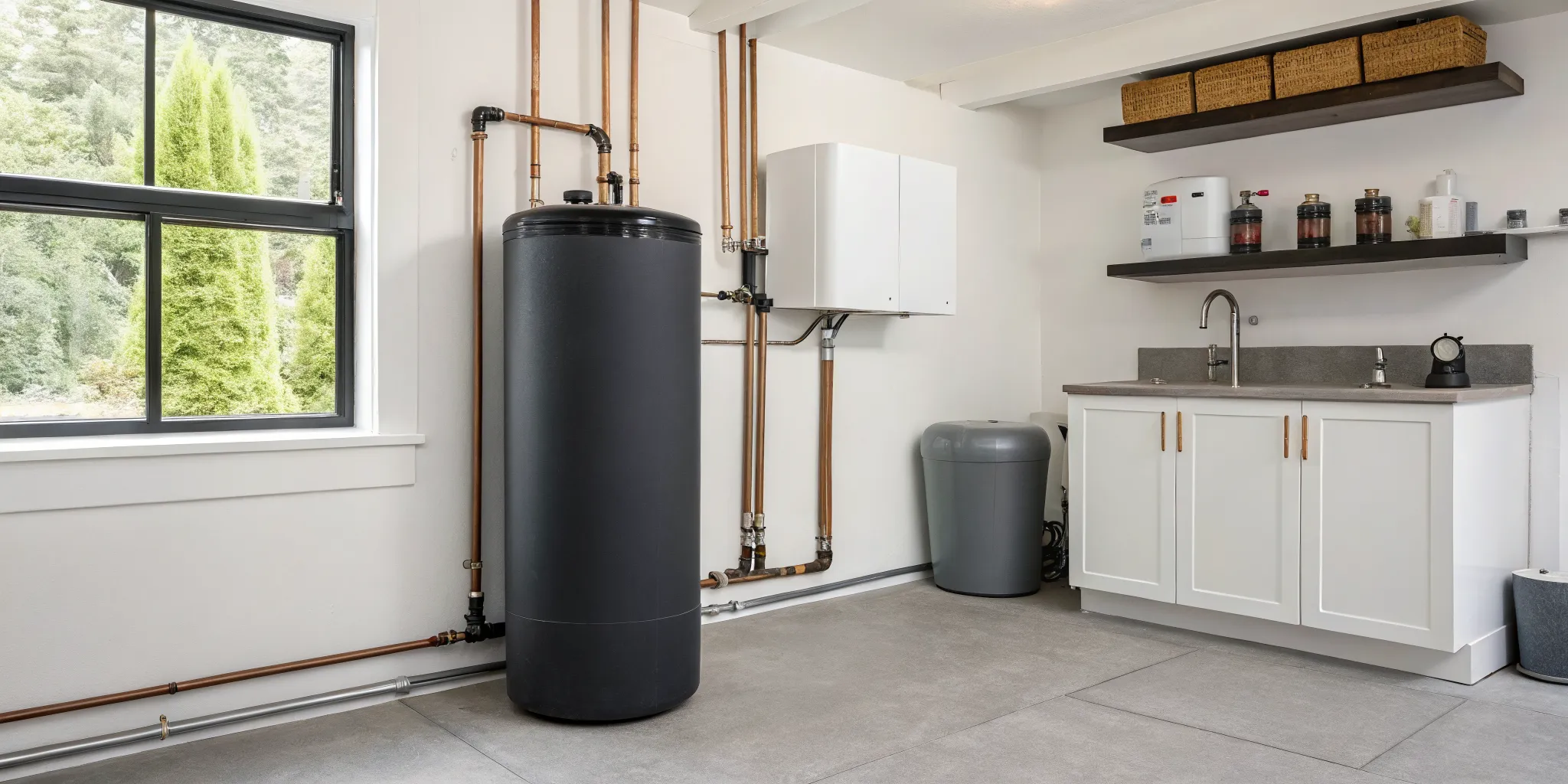
Here in Minnesota, our water is notoriously hard, and it's often full of iron, too. This combination creates a unique challenge that a generic, one-size-fits-all system from a big-box store often can't handle. Those reddish-brown stains on your sinks and the stubborn scale on your faucets are proof that our water requires a tougher solution. The best water softener system for home use in our state is one that's specifically chosen to tackle both high levels of hardness and iron without getting overwhelmed. As a local water specialist, I'll walk you through what Minnesota homeowners need to look for and why a customized approach is the only way to guarantee clear, soft water for years to come.
Need clear answers about your water? Schedule free water testing with Loon Lakes Water Systems before choosing equipment.
Key Takeaways
- Get your water tested first: Don't guess what your water needs; a professional test reveals the exact hardness and iron levels, which is the essential first step to finding a solution that actually works.
- Match the system to your water, not the other way around: The best water softener is one sized for your family's use and built to handle your specific water chemistry, which is why a custom solution often outperforms a generic big-box model.
- Protect your investment with simple care: A water softener is a valuable appliance that protects your home, and keeping it running efficiently is as simple as checking the salt monthly and knowing when to call a pro for service.
Do I Really Need a Water Softener? 4 Telltale Signs of Hard Water
If you've ever wondered why your soap won't lather or why your brand-new kettle has white flakes inside, you might be dealing with hard water. Here in Minnesota, our water is often rich in minerals like calcium and magnesium. While these minerals aren't harmful to your health, they can cause a whole host of frustrating and expensive problems around your home. You might notice these issues and write them off as minor annoyances, but they are often clear signs that your water is working against you, creating more work and costing you money.
From your morning shower to your evening chores, hard water leaves its mark. It can affect everything from the feel of your skin and hair to the lifespan of your most expensive appliances. Ignoring these signs can lead to clogged pipes, inefficient appliances, and a constant battle against soap scum and mineral buildup that never seems to end. The good news is that you don't have to live with it. Recognizing the signs is the first step toward finding a real solution. The only way to know for sure what's in your water is with a professional analysis, which is why we offer free water testing to give you a clear picture of your home's water quality.
That Chalky Buildup on Faucets and Showerheads
If you're tired of scrubbing at a stubborn, chalky film on your faucets, shower doors, and showerheads, you can blame hard water. This crusty white substance is limescale, and it's the calling card of calcium and magnesium deposits. No matter how much you clean, it seems to come right back. This buildup isn't just an eyesore; it can clog the small holes in your showerhead, leading to weak and uneven water pressure. Over time, these mineral deposits can permanently damage your fixtures, forcing you to replace them sooner than you should have to. It's one of the most visible signs that the minerals in your water are building up throughout your home's plumbing.
Your Skin Feels Dry and Your Hair Looks Lifeless
Do you step out of the shower feeling tight, dry, and itchy? Does your hair feel brittle and look dull, no matter which shampoo you try? Hard water could be the culprit. The minerals in hard water react with soap and shampoo to create a sticky soap scum that doesn't rinse away completely. This residue can clog your pores and leave a film on your skin that prevents your natural oils from doing their job, leading to dryness and irritation. Similarly, that same film coats your hair shafts, weighing them down and making them look flat and frizzy. You end up using more product to get clean, but you never feel fully refreshed.
Dishes That Never Seem Truly Clean
It's incredibly frustrating to open your dishwasher expecting sparkling clean dishes, only to find them covered in a cloudy film or white spots. This is a classic sign of hard water. As the water evaporates during the drying cycle, it leaves behind mineral deposits on your glasses, plates, and silverware. You might try re-washing them or using extra rinse aid, but the problem persists. This isn't just a cosmetic issue; that same mineral buildup is also coating the inside of your dishwasher, including the heating element and spray arms. This can reduce its cleaning effectiveness and eventually lead to costly repairs.
Appliances Are Working Harder and Breaking Down Sooner
The damage you can see is often just the tip of the iceberg. Inside your water-using appliances, hard water is causing serious problems. Limescale builds up in your water heater, washing machine, dishwasher, and coffee maker. This forces them to work much harder and use more energy just to function. For a water heater, scale buildup on the heating element acts as a layer of insulation, requiring more electricity or gas to heat your water. This leads to higher utility bills and puts extra strain on the appliance, significantly shortening its lifespan. Investing in one of our water softener systems protects these major household investments from premature failure, saving you money and hassle in the long run.
Salt vs. Salt-Free: Which Water Softener is Right for You?
When you start looking at water softeners, you'll quickly find yourself facing a big question: salt-based or salt-free? They sound similar, but they work in completely different ways. One actually removes hard minerals, while the other changes how they behave. Understanding this difference is the key to finding the right solution for your home. Your choice will depend on how hard your water is and what results you're looking for, from eliminating scale buildup to getting that truly soft-water feel on your skin and hair. Let's break down what each system does so you can make an informed decision.
The Classic Choice: How Salt-Based Systems Remove Hardness
A traditional salt-based water softener is the only system that truly softens your water. It works through a process called ion exchange. Inside the system are tiny resin beads coated in sodium. As hard water flows through, the calcium and magnesium minerals (the culprits behind all that scale) are attracted to the beads. The system then swaps these hard minerals for sodium ions, releasing softened water into your home. This is the most effective way to remove hard minerals completely, which stops scale, protects your appliances, and leaves your skin feeling smoother and your dishes sparkling.
The Alternative: What Salt-Free Conditioners Actually Do
Salt-free systems are more accurately called water conditioners, not softeners. They don't use salt and don't actually remove the hard minerals from your water. Instead, they use various technologies to change the structure of the minerals, making them less likely to stick to surfaces. This process, called conditioning, can help prevent the scale buildup you see on faucets and inside pipes. While they are lower maintenance since you don't have to add salt, they don't provide the other benefits of truly soft water. Your water will still contain the same amount of calcium and magnesium as before.
Softening vs. Conditioning: What's the Real Difference?
The difference between softening and conditioning comes down to one thing: mineral removal. A salt-based system physically takes the hardness minerals out of your water. A salt-free conditioner leaves them in but attempts to make them less problematic. Because the minerals are still present with a conditioning system, you won't get that silky feeling from your water, and you may not see the same improvement in soap lathering or laundry brightness. For a system to be a true softener, it must use ion exchange to remove minerals, which is exactly what salt-based units are designed to do.
The Best Bet for Minnesota's Water Challenges
So, which one is right for you? Here in Minnesota, we often deal with very hard water that's also high in iron. For these tough water conditions, a salt-based water softener is almost always the most effective solution. It's the only way to fully combat the scale, protect your plumbing and appliances, and get all the benefits of soft water. While a salt-free conditioner might be an option for slightly hard water, it typically can't handle the high mineral content common in our area. The only way to know for sure is to find out exactly what's in your water. A professional free water test will give you the data you need to choose with confidence.
Start with water testing.
Loon Lakes Water Systems helps Minnesota homeowners understand hardness, iron, sulfur odor, drinking water concerns, and equipment issues before recommending a solution.
Schedule Free Water TestingKey Features to Look For in a Water Softener
Once you've decided a water softener is the right move for your home, the next step is choosing the right one. Walking through the appliance aisle or browsing online can feel overwhelming, with all the different specs and features. But don't worry, you don't need an engineering degree to figure it out. Focusing on a few key features will help you find a system that works efficiently, saves you money, and provides soft water for years to come. Think of it as creating a checklist for your perfect water softener.
Grain Capacity: Matching the System to Your Family's Needs
A water softener's "grain capacity" tells you how many grains of hardness it can remove from your water before it needs to run a cleaning cycle, also known as regeneration. The right capacity for you depends on two things: how hard your water is and how much water your household uses. A system that's too small will regenerate constantly, wasting salt and water. One that's too big is an unnecessary expense. As a general rule, a 32,000-grain system works well for a one or two-person household, while a family of three to five will likely need a 48,000-grain system or larger. The best way to know for sure is to get a professional water test to measure your water's exact hardness level.
Flow Rate: Ensuring Strong Water Pressure
Have you ever been in the shower when someone flushes a toilet or starts the dishwasher, and the water pressure suddenly drops? That's related to flow rate. A water softener's flow rate, measured in gallons per minute (GPM), determines how much softened water can move through your pipes at once. If the flow rate is too low for your home's needs, you'll notice a drop in pressure when you use multiple fixtures simultaneously. For a typical home with one to three bathrooms, you'll want a system with a flow rate of at least 11-12 GPM to keep the water flowing strong, whether you're doing laundry, washing dishes, or taking a shower.
Regeneration: Choosing a "Smart" System Over a Timed One
Salt-based softeners need to periodically clean and "recharge" their resin beads through a process called regeneration. Older models do this on a simple timer, regenerating every few days whether they need to or not. This is inefficient and wastes a lot of salt and water. Modern, high-efficiency systems use a much smarter approach called demand-initiated regeneration. These systems include a meter that tracks your actual water usage and only run a regeneration cycle when the resin is actually full of hardness minerals. This intelligent feature ensures the system operates at peak efficiency, saving you money and reducing waste. All of the high-quality products we recommend use this smart technology.
Efficiency: Saving Salt, Water, and Money
An efficient water softener doesn't just save you money on salt and water bills; it's also better for the environment. The most efficient systems use features like demand-initiated regeneration and upflow brining, where the saltwater solution flows up through the resin tank. This method cleans the resin more effectively while using significantly less salt and water compared to older, downflow models. While a high-efficiency system might have a slightly higher upfront cost, the long-term savings on salt and water can be substantial, often paying for the difference in just a few years. It's an investment that delivers returns month after month.
Warranty and Support: Finding a Partner for the Long Haul
A water softener is a long-term investment in your home, so you want to be sure it's backed by a solid warranty and reliable support. A good manufacturer's warranty, often ranging from five years to a lifetime on certain parts, shows that the company stands behind its product. But the warranty is only part of the equation. Just as important is having a local expert you can call for installation, maintenance, and repairs. When you work with a local specialist, you get peace of mind knowing that professional service is just a phone call away, ensuring your system runs smoothly for its entire lifespan.
How to Choose the Right Size Water Softener
Picking the right size water softener isn't about the physical space it takes up in your basement. It's all about its capacity, which is its ability to handle your family's water usage and the specific hardness of your water. Think of it like buying an air conditioner for a room. A tiny window unit won't cool a large living room, and a massive central air system is overkill for a small bedroom. The same principle applies here. A system that's too small will constantly be running to keep up, wasting salt and water in the process. On the other hand, one that's too large will regenerate too infrequently. This can lead to problems like bacterial growth in the resin bed and means you've spent more money upfront than you needed to.
Getting the size right is a balancing act, but it's simpler than it sounds. It comes down to three key things: how much water your household uses, the hardness level of your water, and what other minerals, like iron, are present. By looking at these factors together, you can find a system that works efficiently, saves you money, and provides consistently soft water for years to come. Let's walk through how to figure out exactly what you need to find that perfect fit for your home.
Calculate Your Home's Daily Water Needs
First, let's do a little math to estimate how much work your softener will need to do. The key is to figure out your home's daily softening requirement, which is measured in grains. A good rule of thumb is to plan for about 75 gallons of water use per person, per day. To get your total daily gallons, just multiply that number by the number of people in your home.
Next, you need to know your water's hardness level in grains per gallon (gpg). The only way to know this for sure is to get your water tested. Once you have that number, multiply it by your household's total daily gallons. For example, a family of four using 300 gallons per day with water hardness of 15 gpg would need to remove 4,500 grains of hardness daily.
Find Your Recommended Size by Household
Water softeners are rated by their grain capacity, which tells you how many total grains of hardness they can remove before they need to go through a cleaning cycle, called regeneration. Using our example above, a 32,000-grain system could go about a week before regenerating (32,000 divided by 4,500 is just over 7 days).
For smaller households of one or two people, a system with a 24,000 to 32,000-grain capacity is often a great fit. A typical family of four will likely need a 32,000 to 48,000-grain unit. For larger families or homes with exceptionally hard water, you might look at systems with 64,000 grains or more. Choosing a system that regenerates about once a week is a good goal for peak efficiency.
Don't Forget to Factor in Iron and Other Minerals
Here in Minnesota, water hardness is only part of the story. Many of us also deal with high levels of iron, which can cause those frustrating reddish-brown stains on sinks and laundry. Standard water softeners can remove small amounts of iron, but they can struggle with the higher levels common in our local well water.
When iron isn't properly accounted for, it can foul the resin inside your softener, making it less effective at removing hardness minerals and eventually leading to costly damage. That's why a professional free water test is so important. It will tell you not just your hardness level but also how much iron needs to be treated, ensuring you get a system that can handle everything your water throws at it.
What Defines the "Best" Water Softener System?
When you start shopping for a water softener, it's easy to get lost in brand names and technical specs. But the truth is, the "best" system isn't about having the most expensive model or the one your neighbor has. The best water softener is the one that's perfectly matched to your home's unique water chemistry, your family's water usage, and your long-term budget. It's less about a specific product and more about a tailored solution. A truly great system is defined by a few key factors: it's built for your specific water, it operates efficiently to save you money, it's made with durable parts that last, and it's installed and supported by experts who understand local water challenges. Let's look at what each of these means for you.
A System Built Specifically for Your Water
The single most important factor in choosing a water softener is your water itself. A system that works wonders for a home on city water might fail completely against the high iron content of a private well. That's why a professional water analysis is the essential first step. A thorough free water test reveals exactly what's in your water, including its hardness level in grains per gallon (GPG) and the concentration of minerals like iron and manganese. This data allows a specialist to recommend a system with the right capacity and features to handle your specific water problems effectively, ensuring you get the results you expect without overpaying for a system you don't need.
High-Efficiency Technology That Saves You Money
Modern water softeners are much smarter than older models. Look for systems with demand-initiated regeneration, which is a fancy way of saying the system cleans itself based on how much water you've actually used, not on a fixed timer. This feature alone can significantly reduce your salt and water consumption, saving you money every month. An efficient system doesn't just soften your water; it does so with minimal waste. High-efficiency water softener systems are designed to be as resourceful as possible, which is good for both your wallet and the environment.
Durable Parts That Are Built to Last
A water softener is a long-term investment in your home, so you want one that's built to last. High-quality systems can run for 15 years or more, but that depends on the quality of their components. The heart of a salt-based softener is its resin, and systems with 10% crosslink resin are far more durable and resistant to chlorine than standard 8% resin. This means they last longer and perform better over time. Paying attention to the quality of the control valve and tank construction also ensures your system can withstand years of use without constant repairs, giving you reliable soft water day after day.
Why a Custom Solution Beats a Big-Box System
It can be tempting to grab an all-in-one system from a big-box store, but these are rarely the best solution, especially for Minnesota's challenging water. These one-size-fits-all units often struggle to handle both hardness and high iron levels effectively. A custom approach from a water treatment specialist ensures your system is perfectly sized for your home and addresses all your water issues. This might mean installing a dedicated iron filtration system alongside your softener. A properly sized and professionally installed system will always outperform a generic one, providing better water quality and greater peace of mind.
Don't Fall for These Common Water Softener Myths
When you start looking into water softeners, you'll quickly find a lot of conflicting information out there. It can be tough to sort fact from fiction, especially when you're just trying to solve a problem like spotty dishes or dry skin. Let's clear the air and bust a few of the most persistent myths about water softeners. Understanding what these systems can and can't do is the first step toward finding the right solution for your home. Getting straight answers helps you make a confident choice, ensuring you invest in a system that truly meets your needs without any surprises down the road.
Myth: "You can't drink softened water."
This is probably the most common concern I hear, and it's rooted in a misunderstanding about sodium. While salt-based softeners do use a process called ion exchange that adds a very small amount of sodium to the water, the levels are generally quite low. For most people, the amount is insignificant and perfectly safe to drink. However, if you or someone in your family is on a strict, doctor-ordered low-sodium diet, it's a valid point to consider. In that case, you can always pair your softener with a reverse osmosis drinking water system, which removes the sodium and provides purified water right at your kitchen sink.
Myth: "A softener purifies your water."
It's easy to assume that a system treating your water is also purifying it, but a water softener has a very specific job: to remove the minerals that cause hardness, like calcium and magnesium. It excels at this, but it is not designed to remove other things like bacteria, viruses, chlorine, or sediment. If you have concerns about the taste, smell, or safety of your water, a softener alone isn't the complete answer. The best way to know exactly what's in your water is to get it tested. A professional free water analysis will identify any contaminants and help determine if you need a softener, an iron filter, or another type of purification system.
Myth: "All water softeners are basically the same."
Walking through a big-box store, you might think all water softeners are created equal, but that couldn't be further from the truth. The quality, efficiency, and lifespan of water softeners can vary dramatically between brands and models. Cheaper systems often use lower-quality parts and less efficient technology, which can lead to more frequent repairs and higher salt and water usage over time. A high-quality system is built with durable components and smart features that regenerate only when needed, saving you money in the long run. We focus on providing reliable, high-efficiency water conditioning products that are tailored to handle Minnesota's specific water challenges.
Myth: "Softeners are a 'set it and forget it' appliance."
While modern water softeners are incredibly low-maintenance, they aren't completely hands-off. A salt-based system will need you to periodically check the salt level in the brine tank and add more as needed, usually just once every month or two. It's a simple task that takes only a few minutes. Beyond that, the internal resin that does the actual softening will last for many years but will eventually need to be replaced. Choosing a quality system and a reliable installation partner ensures your system runs efficiently for years and that you have expert water softener support available when you eventually need it for maintenance or repairs.
Breaking Down the Cost of a Water Softener
Thinking about the price of a water softener is a practical part of the process. It's helpful to see it not just as a purchase, but as an investment in your home's plumbing, your appliances, and even your daily comfort. The total cost isn't just the number on the price tag; it includes the initial purchase and installation, the minor ongoing expenses for it to run, and the long-term value it brings. Understanding these three parts will give you a clear picture of what to expect and help you budget for a system that truly solves your hard water headaches for years to come.
The Upfront Investment: Purchase and Installation
The initial cost of a quality water softener system, including professional installation, typically falls between $1,000 and $2,500. This range covers the equipment itself and the expertise needed to get it running perfectly in your home. While you might see cheaper options at big-box stores, they often lack the durability and efficiency of a professionally selected unit. The final price depends on the size of the system your home needs and the complexity of the installation. The only way to get a precise quote is to start with a professional water test, which identifies exactly what's in your water and what it will take to treat it.
The Ongoing Costs: Salt, Water, and Maintenance
For a salt-based system, which is the most effective type for Minnesota's hard water, you'll have a few small, predictable running costs. The main one is salt. You'll need to add bags of salt to the brine tank every so often to keep the system working. Most homeowners find they need to check the salt level every four to six weeks. A modern, high-efficiency system also uses water to clean itself during a process called regeneration, but it's designed to be as minimal as possible. Think of these costs like the gas and oil for your car; they are a normal part of maintaining a water softener that's protecting your home.
Long-Term Value: Comparing Salt-Based and Salt-Free Systems
When you look at long-term value, it's about more than just saving on salt. Salt-free systems, often called water conditioners, don't actually remove the hard minerals that cause soap scum, dry skin, and appliance damage. They simply change the minerals' structure to help prevent scale buildup inside pipes. A true salt-based water softener physically removes those minerals, giving you all the benefits of soft water. While a salt-free system avoids the cost of salt, it doesn't solve the core problem. The best long-term value comes from choosing the right technology for your specific water issues, which is why we provide customized water solutions based on thorough testing.
Keep Your Water Softener in Peak Condition
Once your water softener is installed, it's easy to forget it's there, quietly working behind the scenes. But like any important home appliance, it needs a little attention to keep running smoothly for years to come. Think of it like changing the oil in your car; a few simple maintenance steps can prevent bigger headaches down the road and ensure you're always getting the soft water you expect.
Luckily, most of the upkeep is straightforward and doesn't require a lot of time. Taking a few minutes every month to check on your system will protect your investment and keep it operating at its best. Below are a few key habits to get into. By staying on top of these simple tasks, you can extend the life of your softener and make sure it's working as efficiently as possible. And for the bigger things, it's always good to know who to call.
Check Your Salt and Clean the Brine Tank
Your water softener needs salt to do its job, so the most important habit is to check the salt level in the brine tank every month. If it gets too low, you'll start noticing the signs of hard water again. While you're there, look for a "salt bridge," which is a hard crust that can form over the water. If you see one, just gently break it up with a broom handle.
About once a year, it's a good idea to give the brine tank a full cleaning. Scoop out any leftover salt and water, scrub the inside with soap and water, and rinse it out. This simple step prevents buildup and keeps your system in great shape. If you'd rather leave it to an expert, our team offers water softener repair and maintenance.
Use Your System's Efficiency Features
Modern water softeners have some great features designed to save you money. The best ones use a technology called demand-initiated regeneration. Instead of regenerating (the process of cleaning itself) on a fixed schedule, a smart system monitors your water usage and only regenerates when it's actually needed. This means it uses significantly less salt and water over time.
If your system has this feature, you're already on the right track. If you have an older, timer-based model, you might consider upgrading to a more efficient one when the time comes. The long-term savings on salt and water can be substantial. You can explore different high-efficiency water softener products to see what makes the most sense for your home.
Know When to Call for Professional Service
While checking salt and cleaning the tank are manageable tasks for most homeowners, some issues are best left to a professional. If your system is making strange noises, leaking, or just not softening your water effectively even with a full salt tank, it's time to call for help. Trying to fix complex mechanical or electronic problems yourself can sometimes cause more damage.
Don't hesitate to reach out for professional support. A quick service call can diagnose the problem and get your system running correctly, saving you time and frustration. If you're unsure about any aspect of your water softener's performance, a great first step is to schedule a free water test to confirm your water chemistry and ensure your system is properly calibrated.
Your First Step: Get a Free, No-Obligation Water Test
Before you start shopping for a water softener, your very first move should be to figure out what's actually in your water. Think of it this way: you wouldn't take medicine without a diagnosis, right? The same logic applies here. The most critical piece of information you need is your water's hardness level, which is measured in grains per gallon (GPG). This number tells you how much dissolved calcium and magnesium is in your water, and it's the key to choosing a system that can handle the job. Hardness levels can be surprisingly different from one street to the next, so what works for your friend across town might not be the right fit for you.
It's also important to check for other minerals, especially iron. High iron levels can cause those stubborn reddish-brown stains and may require a system with a special resin to remove it effectively. Beyond the mineral content, you'll want a rough idea of your household's daily water use. A simple way to estimate this is to multiply the number of people in your home by 75 gallons. According to the Department of Energy, this helps determine the right capacity for your softener so it can keep up with your family's demands without wasting salt and water.
Putting all these pieces together can feel a little overwhelming, but it doesn't have to be. Instead of guessing, you can get a clear and accurate picture of your water quality. The best way to start is with a professional analysis. We offer a completely free water test with no strings attached. We'll come to your home, test your water right from the tap, and explain exactly what we find. This gives you the concrete data you need to make a smart decision, whether you end up working with us or not.
Frequently Asked Questions
Is softened water safe to drink? I'm worried about the added salt. This is a great question and a very common concern. The softening process does add a tiny amount of sodium to your water, but for most people, the amount is insignificant. For context, the sodium in a full quart of very hard softened water is often less than what you'd find in a single slice of white bread. It's generally not enough to affect your health or taste. However, if you are on a strictly sodium-restricted diet, a reverse osmosis drinking water system is a perfect partner to a softener, as it removes the sodium and other impurities for purified water right at your sink.
How much work is it to maintain a water softener? Modern water softeners are surprisingly low-maintenance. Your main task is simply keeping the brine tank filled with salt. Most people find they only need to check the salt level and add a new bag every month or two, which only takes a few minutes. Beyond that, it's a good practice to clean out the inside of the brine tank about once a year to prevent any buildup. It's a small task that goes a long way in keeping your system running efficiently for its entire lifespan.
Why can't I just buy a cheaper system from a big-box store? It can be tempting, but those one-size-fits-all systems are rarely the right solution for Minnesota's water. Our water often has high levels of both hardness and iron, and a generic unit usually isn't built to handle both effectively. This can lead to poor performance and a shorter lifespan. The best system is one that is sized specifically for your home's water usage and chemistry. A custom solution from a specialist ensures you get the right equipment for the job, plus professional installation and local support you can count on for years.
My hard water seems like a minor annoyance. Is a softener really worth the investment? Those minor annoyances are often signs of bigger, more expensive problems. The limescale you scrub off your faucets is also building up inside your water heater, dishwasher, and washing machine, forcing them to work harder and burn out sooner. You also end up spending more on soaps, detergents, and lotions to fight the effects of hard water. A water softener protects your major appliances from premature failure and lowers your utility bills, so it's an investment that truly pays for itself over time.
How do I know what size and type of system I actually need? You can't know for sure without knowing exactly what's in your water. The right size depends on your water's specific hardness level, the amount of iron present, and how much water your family uses. Guessing can lead to buying a system that's too small and inefficient or one that's too large and expensive. The only way to choose with confidence is to start with a professional water analysis. This gives you the data needed to select a system that is perfectly tailored to your home.
Ready for better water?
Call 612-930-0156 or request a free water test. We will explain what is in your water and help you choose the right next step.
Request Free Water Testing