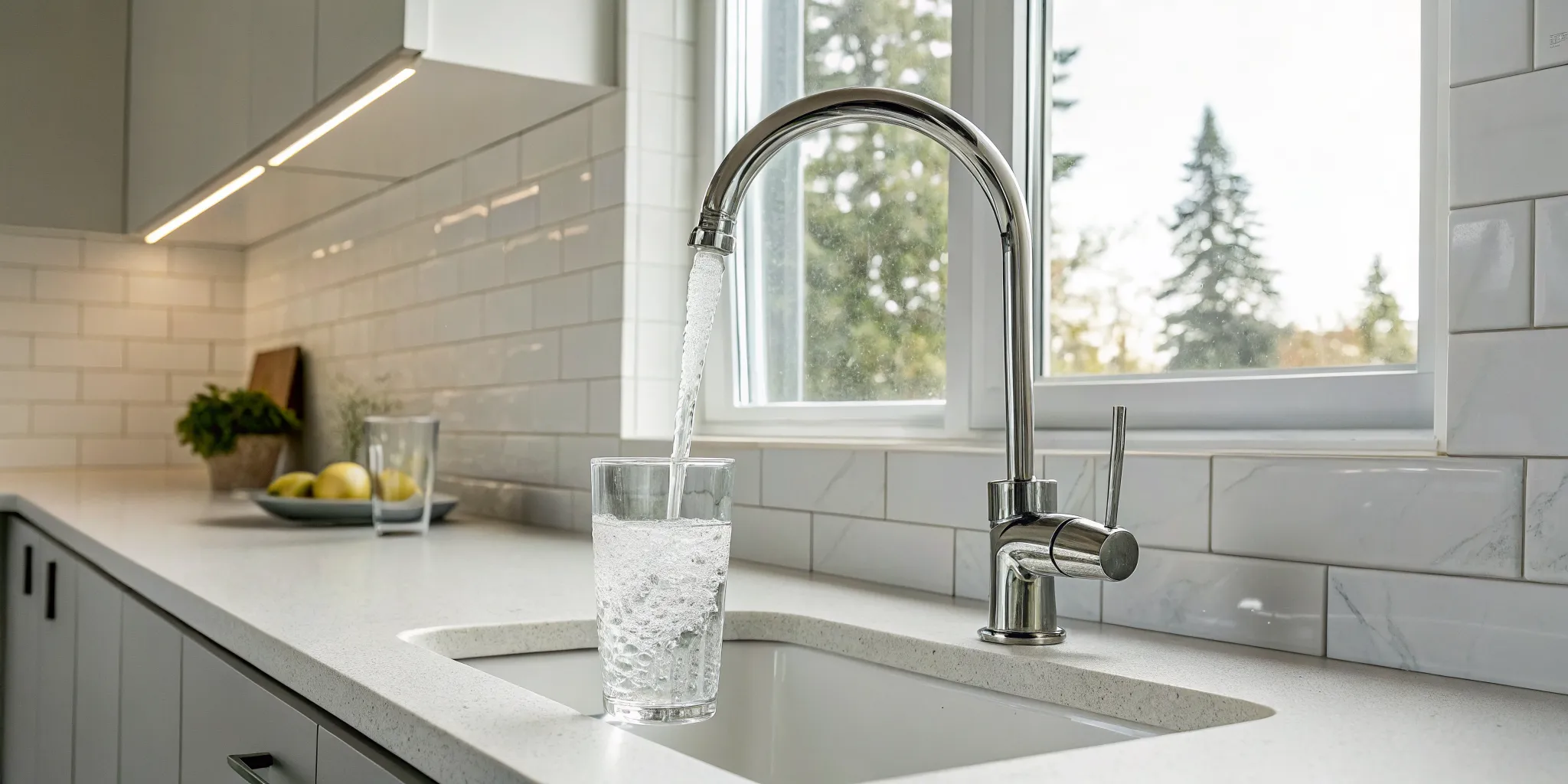
How many cases of bottled water have you lugged home from the store this year? Many of us reach for bottles assuming it's a purer, healthier choice than what comes from the faucet. But that convenience comes at a steep price for your wallet and the planet. The truth is, you already have an incredibly convenient water source piped directly into your home. The real question is how to make that source the best it can be. Instead of relying on an endless stream of single-use plastic, you can transform your own tap water into something even better than what you can buy in a bottle. This guide will break down the myths around bottled water and show you how investing in your home's water is the smarter, healthier, and more sustainable choice.
Need clear answers about your water? Schedule free water testing with Loon Lakes Water Systems before choosing equipment.
Key Takeaways
- Your Tap Water Is Safe, But Not Ideal: While public water meets legal safety standards, it can still contain minerals like calcium and iron that cause stains, damage appliances, and create unpleasant tastes and odors.
- Pinpoint Problems with Professional Testing: The only way to know exactly what is causing issues like hard water or a metallic taste is through a professional water analysis, which provides a clear roadmap for the right solution.
- Install a Targeted Solution for Better Water: A custom system, like a water softener for mineral buildup or a reverse osmosis filter for drinking water, provides a permanent fix that is more cost-effective and environmentally friendly than bottled water.
Where Does Your Tap Water Come From?
Ever turn on your faucet and wonder where that water actually begins its journey? It's a simple question with a surprisingly complex answer. For most of us, our water starts in one of two places before it's collected, treated, and sent through miles of pipes to reach our homes. Understanding the source is the first step to understanding what might be in your water and why it behaves the way it does. The journey from a natural source to your kitchen sink is a fascinating one, and it has a direct impact on the quality of the water you use every day for drinking, cooking, and cleaning.
From Lakes and Rivers (Surface Water)
A huge portion of the country's tap water, especially for larger cities, comes from what's called surface water. Think of Minnesota's iconic lakes, flowing rivers, and the reservoirs that hold vast amounts of water. Public water systems draw from these natural bodies to begin the treatment process. Because this water is exposed to the open air, it can pick up runoff from rain, organic material, and other environmental elements. Most U.S. homes get water from public water systems, which are usually supplied by these major water sources, which is why the public treatment process is so critical for ensuring safety before it ever reaches you.
From Underground Wells (Groundwater)
The other primary source is groundwater. This is water that's held deep underground in the cracks and spaces within soil, sand, and rock, almost like a giant, natural sponge. Many communities, as well as homes with private wells, rely on groundwater. It's accessed by drilling a well and pumping it to the surface. While it's naturally filtered by layers of earth, it can also dissolve and pick up minerals like iron, calcium, and magnesium from the surrounding rock. This is often why well water, and even some city water from groundwater sources, is "hard" or has a high mineral content that can cause stains and scale buildup.
The Journey to Your Faucet
Regardless of whether it starts in a lake or an underground aquifer, your water doesn't just magically appear at the tap. It travels through a public water system, a complex network of pipes and treatment facilities. This system is responsible for cleaning the water and making sure it's safe to drink before it's pumped out to homes and businesses across your community. Government agencies regulate these systems to ensure the water meets specific safety standards. However, "safe" doesn't always mean "perfect." The water can still contain minerals and other substances that affect its taste, smell, and performance in your home, which is where customized water solutions can make a big difference.
How Is Your Water Made Safe to Drink?
Ever wonder what happens to water from a lake or underground well before it flows from your kitchen sink? It's not magic; it's a multi-step treatment process designed to make it safe for a whole community to drink. Your local water treatment facility acts like a giant filter, taking raw water and putting it through several key stages to remove dirt, kill germs, and balance its chemistry. Let's walk through the basic journey your water takes to get to you.
Step 1: Removing Solid Particles
The first stop is all about getting rid of the big stuff. Raw water from lakes or rivers is full of tiny bits of dirt, leaves, and other debris that make it cloudy. To clear this up, treatment plants use a process called coagulation. They add special chemicals, often aluminum sulfate, that act like magnets for these particles. The chemicals cause the tiny specks of dirt to clump together into larger, heavier pieces called "floc." These clumps are much easier to remove in the next stage of the process, setting the stage for clearer water.
Step 2: Filtering Out Impurities
Once the larger particles are clumped together, it's time to filter them out. The water slowly passes through layers of filters made from materials like sand, gravel, and charcoal. These filters trap and remove the clumps of floc along with other smaller impurities. Some facilities also use activated carbon, which is fantastic for grabbing onto the compounds that cause unpleasant tastes or smells. Think of it like a giant water purifier, catching all the stuff you wouldn't want to drink. This step is crucial for making the water look and taste much cleaner before it moves on to disinfection.
Step 3: Disinfecting for Purity
Even after filtering, microscopic germs like bacteria and viruses can still be lurking in the water. The next step, disinfection, is all about eliminating these harmful microorganisms. The most common method is adding a small, controlled amount of chlorine. This is one of the most important steps in public health, as it kills off pathogens that can cause serious illness. A tiny bit of chlorine, called a residual, is intentionally left in the water. This residual continues to protect the water from germs as it travels through the vast network of pipes to your home, ensuring it stays safe right up to your tap.
Step 4: Protecting Pipes and Balancing pH
The final touches involve making sure the water won't cause problems for the pipes that deliver it. The water's pH is adjusted to make it less corrosive, which helps prevent metals like lead and copper from leaching out of older plumbing and into your drinking water. The entire tap water distribution system is carefully managed to keep this clean, treated water completely separate from wastewater. This separation is one of the most critical aspects of modern sanitation. After these final adjustments, the water is ready to be pumped out to homes and businesses across the community.
Start with water testing.
Loon Lakes Water Systems helps Minnesota homeowners understand hardness, iron, sulfur odor, drinking water concerns, and equipment issues before recommending a solution.
Schedule Free Water TestingWho Makes Sure Your Tap Water Is Safe?
It's a fair question to ask: who is actually checking the water before it gets to your tap? Thankfully, you're not just left to wonder. A multi-layered system of oversight is in place, from the federal government all the way down to our local Minnesota communities. These groups work to ensure the water flowing from public systems meets specific safety benchmarks. Understanding who does what can help you feel more confident about the water you use every day and know where to look for more information.
National Standards: The EPA's Role
At the top level, the U.S. Environmental Protection Agency (EPA) is the primary guardian of our nation's water. The EPA sets the legal limits for over 90 contaminants in our drinking water. These legally enforceable drinking water standards are designed to protect public health by limiting the levels of everything from chemicals to microbes. Public water systems across the country are required to follow these rules, regularly test their water, and report the results. Think of the EPA as setting the essential safety floor that every public water utility must meet, no matter where you live in the United States.
Minnesota's Local Water Watchdogs
Here in Minnesota, we have our own local watchdogs who take the national standards and put them into practice. The Minnesota Department of Health (MDH) works directly with local city and county health departments to oversee our public water systems. Their job is to ensure every utility in the state complies with both federal and state regulations. The MDH's Drinking Water Protection program involves conducting regular inspections and tests to monitor water quality. If a problem or contamination issue arises, they are the ones who step in to help address it, providing an essential layer of local oversight for our communities.
How to Read Your Local Water Report
So, how do you see the results of all this testing? Every year, your local water supplier is required to send you a report called a Consumer Confidence Report, or CCR. This document is your personal window into your local water quality. It details exactly what contaminants have been detected in your water, the levels at which they were found, and how those levels compare to the EPA's safety limits. It also explains any potential health effects associated with those contaminants. Reading your CCR is a great first step to becoming more informed about what's in your tap water straight from the source.
What's Really in Your Tap Water?
Ever stop to think about what's in the water that comes out of your faucet? It's more than just H2O. Your tap water is a complex mixture of minerals, treatment chemicals, and sometimes, things you'd rather not be drinking. While municipal water systems work hard to deliver water that meets federal safety standards, what's considered "safe" and what's considered "ideal" for your home and family can be two different things. It's one thing for water to be technically safe to consume, but it's another for it to taste good, feel good on your skin, and be gentle on your home's plumbing and appliances.
Understanding the full picture of your water quality is the first step toward getting water you love. Some substances are added for public health, while others are picked up on the water's journey from its source to your tap. Some are harmless but annoying, while others can be a genuine concern. Let's pull back the curtain and look at what's actually flowing through your pipes, from the helpful to the harmful.
Added for Safety: Chlorine and Fluoride
Your local water treatment facility adds certain chemicals on purpose, and for good reason. The most common one is chlorine (or a similar compound called chloramine), which is used to disinfect the water, killing harmful bacteria and viruses that could make you sick. Think of it as a tiny bodyguard for your water on its journey to your home. Many communities also add fluoride, a mineral that's been proven to help prevent tooth decay. While these additives serve an important public health role, they can affect the taste and smell of your water, and some people simply prefer to remove them before drinking.
Natural Minerals: Calcium and Magnesium (Hard Water)
If you live in Minnesota, you're likely very familiar with hard water. This happens when water passes through rock and soil, picking up natural minerals like calcium and magnesium along the way. These minerals are not harmful to your health; in fact, they are essential nutrients. The problem is what they do to your home. Hard water is the culprit behind soap scum on your shower doors, spotty dishes, stiff laundry, and damaging scale buildup in your pipes and appliances. It makes your soaps and detergents less effective, meaning you have to use more product to get the same result.
Unwanted Guests: Lead, Arsenic, and Copper
Some substances that find their way into water are less welcome. Lead, for example, can leach from old pipes and plumbing fixtures, especially in homes built before the 1980s. Arsenic is a chemical that can naturally be present in the rocks and soil of our region, dissolving into groundwater over time. These contaminants are colorless, odorless, and tasteless, which means you won't know they're there without proper testing. Because they pose significant health risks, it's important to identify and remove them, especially if you have a private well or an older home.
Modern Contaminants: Nitrates and PFAS
Our water sources face challenges from modern life, including agricultural runoff and industrial chemicals. Nitrates, often from fertilizers, can seep into groundwater and are a particular concern for infants and pregnant women. You may have also heard about PFAS, a group of man-made chemicals known as "forever chemicals" because they don't break down easily in the environment. These substances are being detected in water supplies across the country, and their long-term health effects are a growing concern. Removing these complex contaminants often requires specialized filtration systems.
Organic Matter: Bacteria and Runoff
While city water is disinfected, private wells don't have that same level of protection. Wells can be susceptible to contamination from bacteria, viruses, and parasites from nearby septic systems or animal waste. Surface runoff after a heavy rain can also wash pesticides and other organic matter into the groundwater that feeds your well. If you rely on a well, you are solely responsible for the safety of your water. That's why regular professional testing is not just a good idea; it's a critical step to ensure your water is safe for your family to drink.
Treatment Byproducts
Here's an interesting twist: sometimes the process of cleaning water can create its own set of chemicals. When chlorine is used to disinfect water that contains organic matter, it can form compounds called disinfection byproducts (DBPs). The EPA regulates the levels of these byproducts because high concentrations have been linked to health concerns. While the amounts in tap water are typically very low and considered safe by regulatory standards, many people choose to use a home water filter to remove them for extra peace of mind.
So, Is Your Tap Water Safe to Drink?
This is the big question, isn't it? The short answer is that if your water comes from a public system, it has to meet strict federal and state safety standards. But "safe" and "ideal" are two different things. Just because your water is technically safe to drink doesn't mean it's the best quality for your health, your home, or your appliances. Let's break down what safety really means and what to look for in your own tap water.
What "Safe" Actually Means
When regulators say your water is "safe," they mean it meets the legal limits set by the Environmental Protection Agency (EPA). Public water systems test and treat water to ensure that regulated contaminants like certain bacteria and chemicals stay below levels that could cause immediate illness. According to the CDC, your water utility is required to notify you if your water fails these tests. However, "safe" doesn't mean your water is pure. It can still contain germs or chemicals at low levels, as well as minerals and other substances that aren't regulated but can still cause issues in your home. Think of it as a passing grade, not necessarily an A+.
Signs Your Water Might Not Be Up to Par
You don't always need a lab report to suspect something is off with your water. Your own senses are powerful tools. Does your water look cloudy, smell like rotten eggs, or taste metallic? Do you see rust-colored stains in your sinks and toilets or white, crusty buildup on your faucets? These are all clues. Common sources of contamination include everything from natural mineral deposits and agricultural runoff to aging pipes and faulty septic systems. While your water utility handles major threats, these less-obvious quality issues are often left for homeowners to solve. Paying attention to these signs is the first step toward getting better water.
Minnesota's Water Woes: Hard Water and Iron
Here in Minnesota, two of the most frequent water complaints are hard water and excess iron. Hard water contains high levels of minerals like calcium and magnesium. While not a health risk, these minerals cause soap scum, leave spots on dishes, create scale buildup that harms appliances, and can leave your skin and hair feeling dry. Iron is another common nuisance, causing those stubborn reddish-brown stains on fixtures and laundry, along with a metallic taste. Neither of these issues will make your water "unsafe" by legal standards, but they can certainly make life more frustrating and expensive. The only way to know exactly what's in your water is to test it. A free water analysis can pinpoint the specific minerals and contaminants causing problems in your home.
Tap Water vs. Bottled Water: Which Is Better?
Many of us grab a bottle of water without a second thought, assuming it's the purest and safest option. But when you put tap water head-to-head with its bottled counterpart, the winner isn't so clear-cut. The convenience of bottled water comes with significant trade-offs for your wallet, the planet, and even your health. Before you buy another case, let's break down the real story behind what you're drinking.
The Real Cost of Bottled Water
The most obvious difference is the price tag. Bottled water can cost hundreds, or even thousands, of times more than the water from your tap. But the financial hit is just the beginning. The convenience of bottled water often hides its true cost, especially to the environment. While we toss those plastic bottles into the recycling bin with good intentions, the reality is that a huge number of them end up in landfills. In fact, studies have shown that less than a third of plastic containers are actually recycled in the U.S. The rest sit in landfills for centuries, contributing to a massive and growing plastic waste problem.
The Environmental Toll of Plastic
The environmental impact of bottled water is significant, extending far beyond the landfill. As those plastic bottles break down, they can release harmful chemicals into the soil and water. The process of making the bottles in the first place is also incredibly resource-intensive. The production of plastic itself relies on fossil fuels, contributing to climate change long before the bottle ever reaches a store shelf. Then there's the energy used to bottle, ship, and refrigerate the water. When you add it all up, that single-use bottle has a surprisingly large carbon footprint. Choosing tap water is one of the simplest ways to reduce your personal impact on the environment.
What You Miss Out On with Bottled Water
While some bottled water might have less copper or lead than what could be found in older home plumbing, this doesn't automatically make it a better choice overall. In fact, you might be missing out on some benefits. Many municipal water systems add fluoride to help prevent tooth decay, a public health measure that most bottled waters lack. Furthermore, tap water often contains naturally occurring minerals like calcium and magnesium. While high concentrations of these minerals lead to the hard water we often see in Minnesota, in smaller amounts, they are essential for your health. Many bottled waters, especially those labeled "purified," have been stripped of these beneficial minerals during treatment.
The Myth of "Purer" Bottled Water
There is a common misconception that bottled water is inherently purer or safer than tap water. In reality, tap water in the United States is highly regulated by the Environmental Protection Agency (EPA). The disinfectants like chlorine that you sometimes smell are added in very small, safe amounts specifically to protect you from harmful germs. On the other hand, bottled water is regulated by the FDA and the standards aren't always stricter. Ultimately, the best solution isn't to rely on an endless stream of plastic bottles. It's to ensure the water coming from your own tap is the best it can be, which is entirely possible with the right filtration.
How to Spot Problems with Your Tap Water
Even with robust municipal treatment, the water that flows from your faucet isn't always perfect. Problems can develop in the city pipes or even the plumbing inside your own home. Sometimes the signs are obvious, like a strange smell or taste. Other times, the issues are completely invisible. The good news is that you can become a pretty good detective just by paying a little closer attention to your water. Knowing what to look for is the first step toward getting the clean, safe water your family deserves.
Trust Your Senses: Look, Smell, and Taste
Your senses are your first line of defense. If your water looks, smells, or tastes off, that's a clear signal to investigate further. If your tap water appears cloudy when it first comes out of the faucet but clears up after a minute, it's usually just harmless air bubbles. However, persistent cloudiness or visible particles could indicate sediment. Red or brown stains in your sinks and tubs are a classic sign of iron, a common issue in Minnesota. A rotten egg smell points to sulfur, while a metallic taste could mean excess iron or copper. Don't ignore these clues; they're your water's way of telling you something is wrong.
The Limits of DIY Test Kits
You might be tempted to grab a DIY water testing kit from the hardware store, and while it's a start, these kits have significant limitations. They often only test for a few basic things like hardness, chlorine, and pH, and their accuracy can be questionable. They can't detect many of the more serious contaminants like arsenic, lead, or specific bacteria. This is especially critical if you have a private well, which isn't monitored by the government. The CDC notes that private systems are not checked by officials, so the responsibility for ensuring your water is safe falls entirely on you. A simple test strip just won't give you the full story or the peace of mind you need.
Why Professional Testing Gives You the Full Picture
To truly understand what's in your water, nothing beats a professional analysis. A comprehensive lab test screens for a wide range of minerals, metals, bacteria, and chemicals, giving you a precise and reliable breakdown of your water quality. While your local water utility is required to provide safe water, issues can arise in the pipes that carry it to your home. A professional test identifies problems specific to your tap. At Loon Lakes, we offer free water testing to give Minnesota homeowners a clear and accurate picture. We'll help you understand the results and provide straightforward recommendations if a problem is found, without any pressure or confusing jargon.
Take Control: How to Improve Your Home's Water
Finding out what's in your water is the first step, but what comes next? The good news is you don't have to settle for water that stains your fixtures or tastes off. Once you know what you're dealing with, you can choose a solution that targets your specific problems. From simple taste improvements to comprehensive, whole-home purity, there's a system that can give you the clean, safe water your family deserves. The best way to find the right fit is to start with a free water test to get a clear picture of your home's water profile. This professional analysis takes the guesswork out of the equation, giving you a clear roadmap to the perfect water solution for your household.
For Better Taste: Activated Carbon Filters
If your main complaint is that your tap water has a funky taste or a chlorine-like smell, an activated carbon filter is often the perfect fix. Think of it like a super-powered sponge for your water. As water passes through the carbon, impurities that cause bad tastes and odors get trapped. This is a great, straightforward solution for removing things like residual chlorine that municipal plants add for disinfection. These filters can be installed right at your sink for targeted drinking water or as part of a larger system, giving you crisp, clean-tasting water straight from the tap.
For Hard Water: Water Softeners
Are you tired of seeing chalky white buildup on your faucets and showerheads? That's limescale, and it's the telltale sign of hard water. Hard water is full of minerals like calcium and magnesium that can wreak havoc on your home. They clog pipes, reduce the efficiency of your appliances, and make it hard to get a good lather with soap. A water softener tackles this problem head-on by removing those minerals through a process called ion exchange. The result is water that's kinder to your home, your skin, and your hair, helping your appliances last longer and keeping your fixtures looking new.
For Stains and Smells: Iron Filtration Systems
For many Minnesotans, rust-colored stains in sinks and toilets and a "rotten egg" smell are all too familiar. These are classic signs of high iron and sulfur in your water. An iron filtration system is designed specifically to remove these nuisance contaminants before they ever reach your faucet. By oxidizing and filtering out iron particles, these systems prevent staining on your laundry and fixtures. They also eliminate the unpleasant sulfur odor, giving you water that is clean, clear, and odor-free. It's a targeted solution for some of our state's most common water frustrations.
For Pure Drinking Water: Reverse Osmosis Systems
When you want the highest standard of purity for your drinking and cooking water, a reverse osmosis system is the answer. This advanced filtration method pushes water through a semipermeable membrane that removes up to 99% of dissolved contaminants. This includes everything from lead and arsenic to nitrates and PFAS. A reverse osmosis drinking water system is typically installed under the sink and connected to a dedicated faucet, giving you on-demand access to exceptionally pure water. It provides true peace of mind, knowing your family is drinking the cleanest water possible.
For Comprehensive Treatment: Whole-Home Conditioning
If you're dealing with multiple issues or simply want the best water quality throughout your entire house, a whole-home conditioning system is the ultimate solution. Instead of treating water at a single tap, these systems are installed at your home's main water line. This means every drop of water you use for drinking, cooking, bathing, and laundry is treated. It can combine multiple technologies to soften water, remove chlorine, and filter out other contaminants, providing a complete and customized fix. It's a comprehensive approach that ensures every faucet in your home delivers clean, conditioned water.
The Payoff: Why Filtered Water Is Worth It
Deciding to install a water treatment system is about more than just fixing an annoying problem like stained sinks or smelly water. It's an investment that pays you back in ways that truly matter: in your family's health, your monthly budget, and even your environmental impact. When you take control of your water quality, you get lasting benefits that go far beyond the tap. It's about creating a healthier, more convenient, and sustainable home environment, one glass of pure water at a time. Let's look at the real-world value you get from making the switch to filtered water.
Better Health and Peace of Mind
Knowing your water is clean provides incredible peace of mind. While municipal water is treated to meet federal safety standards, that doesn't mean it's free of everything you might want to avoid. Issues can arise as water travels through aging pipes to your home. According to the CDC, water contamination can come from many sources, including chemicals, germs, and heavy metals that may cause illness. A targeted filtration system, like a reverse osmosis unit for your kitchen sink, acts as the final, most important line of defense. It removes contaminants that basic treatment might miss, ensuring the water your family drinks and cooks with is as pure and safe as possible.
Save Money and Ditch the Bottles
If you're constantly buying cases of bottled water, you know how quickly the cost adds up. A home filtration system can feel like a big purchase upfront, but it quickly pays for itself. Think about it: for a one-time investment, you get an almost endless supply of clean, great-tasting water right from your faucet. You'll no longer spend money on single-use plastic bottles that are inconvenient to buy and store. Instead of paying a premium for bottled water, which is often just filtered municipal water anyway, you can invest that money back into your home and family. It's a financially smart move that delivers better water for a fraction of the long-term cost.
A Lighter Footprint on the Planet
Choosing filtered tap water over bottled water is one of the easiest ways to live more sustainably. The environmental toll of plastic bottles is staggering. Producing them requires massive amounts of fossil fuels, and even though they are recyclable, a huge number of them still end up in landfills and oceans, where they take centuries to break down. By filling up a reusable bottle from your own filtered tap, you actively reduce plastic waste and lessen your household's carbon footprint. It's a simple, daily action that contributes to a healthier planet for everyone, proving that what's good for your home can also be good for the world.
Pure Water on Demand, Your Way
One of the best parts of having a home water system is the sheer convenience of having pure water exactly where you need it. No more running out of bottled water or dealing with clunky faucet attachments. With a whole-home system, you get conditioned, iron-free water from every tap, protecting your appliances and making cleaning easier. With a reverse osmosis drinking water system, you get pristine water for drinking and cooking on demand. You can customize a solution that fits your home's specific needs, whether it's tackling Minnesota's notorious hard water or removing specific contaminants. It's your water, perfected for your life.
Get Water That Works for Your Home
Figuring out what's in your water and what to do about it can feel like a big project. Between hard water scale, iron stains, and worries about contaminants, it's easy to feel stuck. But you don't have to settle for water that stains your fixtures, dries out your skin, or just tastes off. The good news is that you can get water that works perfectly for your home and family, and you don't have to figure it out alone.
Every home's water is unique, which is why a one-size-fits-all filter from a big-box store often falls short. The right fix, whether it's a water softener for hardness, an iron filter for rust stains, or a reverse osmosis system for pure drinking water, depends entirely on your water's specific chemistry. This is where having a local Minnesota expert can make all the difference. We understand the specific water challenges in our area and can provide customized water solutions that actually solve your problem for good.
The best first step is to find out exactly what you're working with. Instead of guessing, a professional analysis gives you a clear picture of your water quality. From there, you can get a straightforward recommendation tailored to your home's needs and your budget. If you're ready to stop worrying and start enjoying clean, clear water, you can schedule a free water test with our team. We'll come to you, test your water, and explain the results so you can make a confident choice.
Related Articles
- What Chemicals Can Be Found in Tap Water?
- Drinking Water Sources: An Overview
- Tap Water
- Our Current Understanding of the Human Health and Environmental Risks of PFAS
- Hard Water vs. Soft Water: Which is Better?
Frequently Asked Questions
My city water report says everything is fine, so why do I still have stains and bad-tasting water? This is a great question, and it highlights the difference between water that is "safe" and water that is "ideal" for your home. Your local water report confirms that the water meets the legal health standards set by the EPA, which is great news. However, those standards don't regulate minerals like iron, calcium, and magnesium that cause rust stains and hard water buildup. They also don't account for the taste and smell of disinfectants like chlorine. So, while your water is safe to drink, it can still contain these nuisance substances that affect your home and your enjoyment of the water.
What's the difference between a water softener and a drinking water filter? Think of them as two different specialists for your home. A water softener is designed to solve one major problem: it removes the hardness minerals (calcium and magnesium) that cause scale buildup in your pipes, damage appliances, and leave spots on your dishes. Its main job is to protect your home's plumbing and fixtures. A drinking water filter, like a reverse osmosis system, is a purity specialist. It is installed at your kitchen sink to remove a much wider range of contaminants, like lead, nitrates, and chlorine, to give you exceptionally clean water for drinking and cooking.
I have a private well, not city water. What should I be most concerned about? If you have a private well, you are the sole manager of your water quality, which means regular testing is essential. Unlike city water, well water isn't disinfected, so it can be vulnerable to bacteria from nearby septic systems or agricultural runoff. Wells in our region can also have high levels of naturally occurring minerals like iron and arsenic, which are often tasteless and odorless. Because you won't get a water quality report in the mail, the only way to know for sure what's in your water is to have it professionally tested.
Is a professional water test really necessary, or can I just use a store-bought kit? While a store-bought kit can give you a very basic idea of issues like hardness or chlorine, it has serious limitations. These kits are often not very accurate and they can't detect many of the most concerning contaminants, such as lead, arsenic, bacteria, or PFAS. A professional lab analysis is far more comprehensive. It gives you a precise and reliable breakdown of your water's chemistry, so you can identify the root cause of your problems and choose a solution that will actually work.
If I get a whole-home system, will that also purify my drinking water? It depends on the type of system. A whole-home system, such as a water softener or an iron filter, is installed at your main water line to treat a specific problem throughout the entire house. It will give you soft, non-staining water at every tap. However, these systems are not typically designed to remove the microscopic contaminants that a dedicated drinking water system does. For the highest level of purity, many homeowners choose to pair a whole-home solution with a reverse osmosis system at the kitchen sink for their drinking and cooking water.
Ready for better water?
Call 612-930-0156 or request a free water test. We will explain what is in your water and help you choose the right next step.
Request Free Water Testing