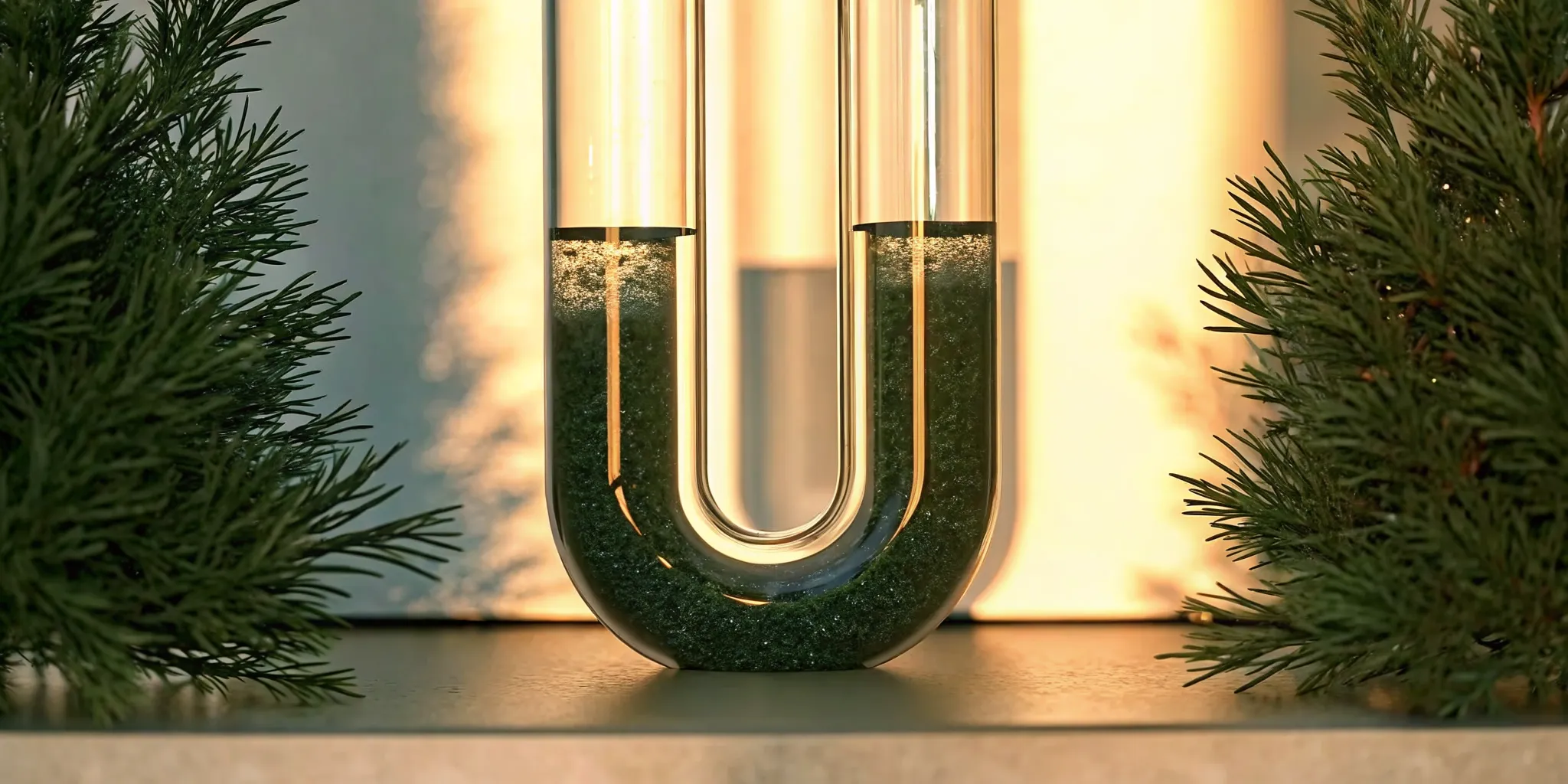
The same natural force that helps a wilting plant stand up straight after being watered is also the key to creating incredibly pure drinking water. This powerful, silent process is called osmosis, and it's one of nature's most essential functions. It dictates how water moves through cell walls, how our kidneys filter our blood, and how nutrients are delivered throughout our bodies. It's a simple concept of water moving to create balance. But what is osmosis in practical terms, and how does this everyday science lesson relate to the quality of water in your glass? Understanding this principle is the first step to seeing how we can use it to provide your home with cleaner, safer water.
Need clear answers about your water? Schedule free water testing with Loon Lakes Water Systems before choosing equipment.
Key Takeaways
- Osmosis is Nature's Balancing Act: It is the natural movement of water across a selective barrier, moving from a less concentrated solution to a more concentrated one to create equilibrium.
- The Process is Essential for Life: Your body uses osmosis for critical functions like absorbing water and filtering waste, while plants rely on it to draw water from the soil and stand tall.
- Reverse Osmosis Purifies Your Water: By applying pressure, we can reverse this natural flow. This technology forces water through a fine membrane, leaving contaminants behind to give you exceptionally clean drinking water.
What Exactly Is Osmosis?
If you've ever looked into water purification, you've probably come across the term "reverse osmosis." But before we can get to the "reverse" part, it helps to understand the original process. So, what exactly is osmosis? At its core, osmosis is a natural phenomenon that's happening all around us, and even inside our own bodies. It's the quiet movement of water with a very specific goal: to create balance.
Think of it as nature's way of evening things out. This process is fundamental to how living cells get the water they need and how certain technologies, like the ones we use to purify your drinking water, can work so effectively. Understanding this basic principle is the first step to seeing how we can harness it to provide your home with cleaner, safer water. Let's break down what's happening on a molecular level.
A Simple Breakdown
Imagine you have two rooms separated by a wall with a special door that only allows water to pass through. One room is packed with dissolved particles like salt and minerals, while the other room is mostly just water. Osmosis is the process where water molecules from the less crowded room will naturally move through the door into the more crowded room. Why? To try and dilute the concentration of particles and create an equal balance on both sides. Water always moves from an area with a higher water concentration to an area with a lower water concentration. It's a simple, spontaneous movement that doesn't require any external energy.
Osmosis vs. Diffusion: What's the Difference?
You might have also heard of diffusion, which sounds similar. Diffusion is the general tendency of particles to spread out from an area of high concentration to an area of low concentration. Think of dropping food coloring into a glass of water; the color gradually spreads until the whole glass is tinted. Osmosis can be considered a specific type of diffusion, but with two key differences. First, osmosis specifically describes the movement of water, not the dissolved particles. Second, this movement happens across a special barrier called a semipermeable membrane. While diffusion is just particles spreading out, osmosis is water moving with a clear purpose: to balance the concentration of solutes that can't cross the barrier themselves.
The Role of the Semipermeable Membrane
The real hero of osmosis is the semipermeable membrane. This is a microscopic filter with pores so tiny that they allow small water molecules to pass through but block larger particles like salts, minerals, bacteria, and other contaminants. You can think of it as a club's bouncer who only lets certain guests (water) through the velvet rope while turning away others (contaminants). This selective barrier is what makes osmosis possible. Without the semipermeable membrane, the dissolved particles would just spread out on their own through diffusion, and you wouldn't get the powerful filtering effect that osmosis provides. This membrane is the key to how we eventually get pure, clean water.
How Does Osmosis Work?
At its core, osmosis is a simple and elegant natural process. It's all about water's tendency to find balance. To really get it, let's break down the three key components: how water moves, the pressure it creates, and the energy (or lack thereof) it needs to happen.
Understanding Water Movement and Concentration
Imagine you have a container split in half by a very fine screen. This screen is our semipermeable membrane. On one side, you have pure water. On the other, you have saltwater. The process of osmosis is the natural movement of water molecules from the pure water side, through the screen, and into the saltwater side. Why? Water wants to dilute the salt and create an equal concentration on both sides. It's a one-way street for water, moving from an area of lower solute (salt) concentration to an area of higher solute concentration until things are balanced out. This fundamental principle is what makes so many biological and chemical processes possible.
What Is Osmotic Pressure?
So, what drives this movement? That's where osmotic pressure comes in. Think of it as the "pull" that the more concentrated solution has on the water from the less concentrated side. The higher the concentration of solutes (like salt, minerals, or other contaminants), the stronger the pull, and the greater the osmotic pressure. This pressure is the force that would need to be applied to the concentrated side to stop the flow of pure water from coming across the membrane. Understanding this concept is key, especially when we later talk about how we can reverse this natural flow to purify water.
Does Osmosis Require Energy?
Here's one of the most fascinating parts: osmosis is a completely passive process. It happens all on its own without any external energy needed. The difference in concentration is all the motivation water needs to move across the membrane. It's like a ball rolling downhill; it just happens naturally because of gravity. This is a crucial distinction because its counterpart, reverse osmosis, is an active process. To make water move against its natural tendency (from more concentrated to less concentrated), we have to apply energy, which is exactly how modern water purification systems work.
Start with water testing.
Loon Lakes Water Systems helps Minnesota homeowners understand hardness, iron, sulfur odor, drinking water concerns, and equipment issues before recommending a solution.
Schedule Free Water TestingThe 3 Types of Osmotic Solutions
To really get how osmosis works, it helps to know about the three types of environments a cell can find itself in. Think of it like Goldilocks and the Three Bears: one is too much, one is too little, and one is just right. The "solution" here refers to the liquid surrounding a cell and its concentration of solutes (like salt or minerals) compared to what's inside the cell. Understanding these scenarios is key to seeing why purifying your water is so important, especially when considering a reverse osmosis system for your home.
Isotonic: The "Just Right" Solution
An isotonic solution is the "just right" scenario for a cell. Here, the concentration of solutes outside the cell is perfectly balanced with the concentration inside. Because of this equilibrium, water moves in and out of the cell at an equal rate. There's no net change, so the cell stays its normal, happy size and shape. This is the ideal state for the cells in our bodies, like red blood cells floating in plasma. Medical resources on osmosis physiology explain that this balance is crucial for maintaining normal cell function and overall health. It's the cellular equivalent of perfect harmony.
Hypertonic: More Solutes on the Outside
Now, let's imagine a solution that's "too much." In a hypertonic solution, the liquid outside the cell has a higher concentration of solutes than the liquid inside. To try and balance things out, water rushes from inside the cell to the outside, where the solutes are more concentrated. This causes the cell to lose water, shrink, and shrivel up. You can see this happen when you sprinkle salt on a slug or a slice of cucumber. The process, known as plasmolysis, is why drinking saltwater is so dangerous; it dehydrates your body's cells.
Hypotonic: More Solutes on the Inside
A hypotonic solution is the opposite situation: the concentration of solutes is lower outside the cell than inside. In this case, water follows its natural course and moves from the low-solute area (outside) to the high-solute area (inside) to try and dilute it. This influx of water causes the cell to swell up like a balloon. If the membrane isn't strong enough to handle the pressure, it can even burst. This bursting, called cytolysis, is what happens to red blood cells if they are placed in pure, distilled water.
Why Does Osmosis Matter for Life?
From the tallest trees to the cells in your own body, osmosis is a fundamental process that makes life possible. It's the silent, constant work happening behind the scenes to keep every living thing hydrated, nourished, and balanced. Without this simple movement of water, our bodies and the world around us couldn't function. Understanding how it works in our daily lives shows just how essential it is.
How Your Body Uses Osmosis Every Day
You may not realize it, but your body is an expert at using osmosis. Every single day, this process helps your intestines absorb water from the food you eat and allows your kidneys to filter waste from your blood without losing too much water. It's all about balance. Your cells are constantly working to maintain the right amount of water inside them. If the fluid outside a cell is too salty, water will move out, causing the cell to shrink. If the fluid is not salty enough, water will rush in, causing it to swell. This delicate fluid transfer is crucial for keeping your body's systems running smoothly.
The Secret to Healthy, Happy Plants
If you've ever cared for a houseplant, you've witnessed osmosis in action. Plants rely on osmosis to pull water from the soil up into their roots. This movement of water creates pressure inside the plant's cells, which is what helps them stand up tall and firm. It's also how they absorb essential nutrients from the soil. However, this process can also work in reverse. If the soil becomes too salty, perhaps from over-fertilizing, osmosis will pull water *out* of the plant's roots and back into the soil. This is why plants can wilt and dry out even when the soil is wet, showing how critical the right water balance is for them to thrive.
Delivering Nutrients and Removing Waste
At its core, osmosis is the ultimate delivery and cleanup service for every cell in your body. It's a key player in a wide range of bodily functions, including digestion and even how your nerves send signals. The process ensures that water can carry vital nutrients across the cell membrane and into the cell where they're needed. At the same time, it helps transport metabolic waste products out of the cells to be filtered and removed from the body. This constant exchange, driven by osmosis, is essential for maintaining the stable internal environment, or homeostasis, that our bodies need to function properly and stay healthy.
Where Can You See Osmosis in Action?
Osmosis might sound like a term that belongs in a high school science lab, but it's a process that happens all around us, every single day. From the food we eat to the water we drink, this natural movement of water plays a surprisingly big role in our lives. Once you know what to look for, you'll start seeing examples of osmosis everywhere. Let's look at a few common places where this amazing process is hard at work, including right in your own home.
In the Kitchen: Preserving Food
Have you ever wondered how pickles get so crunchy or why salting eggplant makes it less watery? That's osmosis! When you place a cucumber in a jar of salty brine, the high concentration of salt outside the cucumber pulls water out of its cells. This process not only gives pickles their signature texture but also helps in preserving them by removing the water that bacteria need to thrive. The same thing happens when you make jam; the sugar draws water out of the fruit. It's a simple, effective food preservation technique that people have used for centuries, all thanks to osmosis.
In Medicine: From IV Drips to Dialysis
Osmosis is absolutely essential in the medical field, where it helps keep our bodies in balance. Your cells rely on osmosis to maintain the right amount of water and nutrients to function properly. Medical treatments often harness this process. For example, an IV drip delivers a saline solution that is isotonic to your blood, meaning it has the same concentration, so it can rehydrate you without causing your cells to swell or shrink. In more complex treatments like kidney dialysis, a machine acts as an artificial kidney, using a semipermeable membrane and osmosis to clean waste products from a patient's blood.
In Your Glass: Purifying Drinking Water
This is where the magic really happens for your home's water quality. While osmosis is a natural flow, we can reverse the process to create exceptionally pure drinking water. This is called, you guessed it, reverse osmosis. By applying pressure, a reverse osmosis system forces tap water through a very fine, semipermeable membrane. This membrane is so effective that it allows water molecules to pass through but blocks contaminants like lead, chlorine, salts, and bacteria. The result is crisp, clean water straight from your tap. It's one of the most effective ways to purify drinking water and is the technology behind our reverse osmosis drinking water systems.
What Is Reverse Osmosis?
Now that we've covered how natural osmosis works, let's talk about its opposite: reverse osmosis. As the name suggests, this process flips osmosis on its head to achieve an incredible level of water purification. Instead of water moving to balance out concentrations, reverse osmosis uses pressure to force water through a membrane, leaving contaminants behind. This technology is the powerhouse behind many modern drinking water systems, turning tap water into exceptionally clean, great-tasting water right from your sink. It's one of the most effective methods available for homeowners who want peace of mind about what's in their glass.
How It Reverses the Natural Process
In natural osmosis, water moves from a less concentrated solution to a more concentrated one to create balance. Reverse osmosis does the exact opposite. The process works when water is forced to flow in the opposite direction of natural osmosis. By applying pressure to the water on the contaminated side of a semipermeable membrane, we can push pure water molecules through the membrane's tiny pores. The pressure has to be greater than the natural osmotic pressure to make this happen. All the dissolved solids, salts, and other impurities are too large to pass through, so they get left behind and flushed away. It's a clever way to use a natural principle to our advantage.
How a Reverse Osmosis System Cleans Your Water
When you install a reverse osmosis drinking water system in your home, this is exactly what's happening on a small scale. Tap water from your supply line is first pushed through pre-filters to remove larger sediment, then it enters the reverse osmosis membrane chamber. Here, pressure forces the water through the membrane, which effectively removes an enormous range of contaminants. This includes things like lead, chlorine, fluoride, nitrates, sulfates, and bacteria. The purified water is stored in a small tank, ready for you to use, while the wastewater containing all the rejected contaminants is sent down the drain. The result is pure, high-quality water for drinking and cooking.
Is Reverse Osmosis Water Good for You?
This is a question we get all the time, and the simple answer is yes. Reverse osmosis is excellent at removing harmful contaminants, giving you some of the purest water possible. However, the process is so thorough that it also removes beneficial minerals like calcium and magnesium. While most of our mineral intake comes from food, not water, some people are concerned about drinking demineralized water. It's important to consider the mineral content of your water, and for those who want the best of both worlds, there's a great solution. Many modern RO systems can be equipped with a remineralization filter that adds healthy minerals back into the water after it has been purified.
Is Your Drinking Water as Pure as It Could Be?
When you fill a glass from the tap, you expect the water to be clean and safe. But even treated municipal water or well water can contain dissolved minerals, chemicals, and other impurities that affect its taste and quality. If you're looking for the highest level of purity for your drinking water, one of the most effective methods available is reverse osmosis. This technology provides a final barrier between contaminants and your glass, ensuring your water is exceptionally clean.
A reverse osmosis (RO) system works by pushing water through a semipermeable membrane, which acts like an extremely fine filter. This membrane allows pure water molecules to pass through but blocks a wide range of contaminants, including lead, chlorine, fluoride, salts, and sediment. Research explains that this process works when pressure is used to force water through the membrane, leaving the impurities behind. The result is crisp, clean water that is perfect for drinking and cooking.
Unlike a simple water filter that only traps larger particles, a reverse osmosis system tackles impurities on a molecular level. It reverses the natural process of osmosis, where water would typically move toward a higher concentration of contaminants. By applying pressure, the system ensures only the purest water makes it to your faucet. If you're ready to stop worrying about what might be in your water, an RO system offers a reliable and effective solution for your home. The first step is to find out exactly what's in your water with a professional analysis.
Related Articles
- What Is Osmosis and How Does It Work?
- Osmosis, Osmolarity, and Tonicity
- Osmosis Physiology
- Purifying Drinking Water: Reverse Osmosis Explained
- Reverse Osmosis Drinking Water Systems
Frequently Asked Questions
What's the simplest way to think about the difference between osmosis and reverse osmosis? Think of osmosis as nature's automatic balancing act. Water naturally moves across a barrier to dilute a more concentrated solution, all on its own. Reverse osmosis is the opposite. We apply pressure to push water against its natural tendency, forcing it through a very fine filter that separates pure water from the contaminants. So, one process is passive and aims for balance, while the other is an active process that aims for purification.
If reverse osmosis removes so much, is the water still healthy to drink? Yes, it's exceptionally healthy because it's so pure. The main job of a reverse osmosis system is to remove a huge list of potentially harmful contaminants, giving you incredibly clean water. While the process also removes minerals like calcium and magnesium, we get the vast majority of these essential minerals from food, not water. For anyone who wants the best of both worlds, we can add a remineralization filter that puts healthy minerals back into the water after it's purified.
Why would I need a reverse osmosis system instead of a standard water filter? A standard water filter, like one you'd find in a pitcher, is good at trapping larger particles and reducing chlorine to improve taste. A reverse osmosis system works on a much finer, molecular level. It uses a special membrane to remove a far wider range of dissolved contaminants, including salts, lead, fluoride, and nitrates, that simpler filters just can't catch. It offers a significantly higher level of purification.
You mentioned osmosis happens in our bodies. Does drinking purified water affect that? That's a great question, but there's no need to worry. Your body is an expert at maintaining its own internal balance. When you drink water, it enters your digestive system and mixes with food and other fluids long before it's absorbed. Your body then takes what it needs to stay hydrated and keep your cells happy. Drinking pure water simply gives your body a clean, healthy starting point.
How do I know if a reverse osmosis system is right for my home? The best way to know for sure is to find out what's actually in your water. The water quality in your home depends on many factors, including your location and whether you have city or well water. A professional water test can identify the specific contaminants present. Based on those results, you can make an informed decision about whether a reverse osmosis system is the right solution for your family's drinking water.
Ready for better water?
Call 612-930-0156 or request a free water test. We will explain what is in your water and help you choose the right next step.
Request Free Water Testing