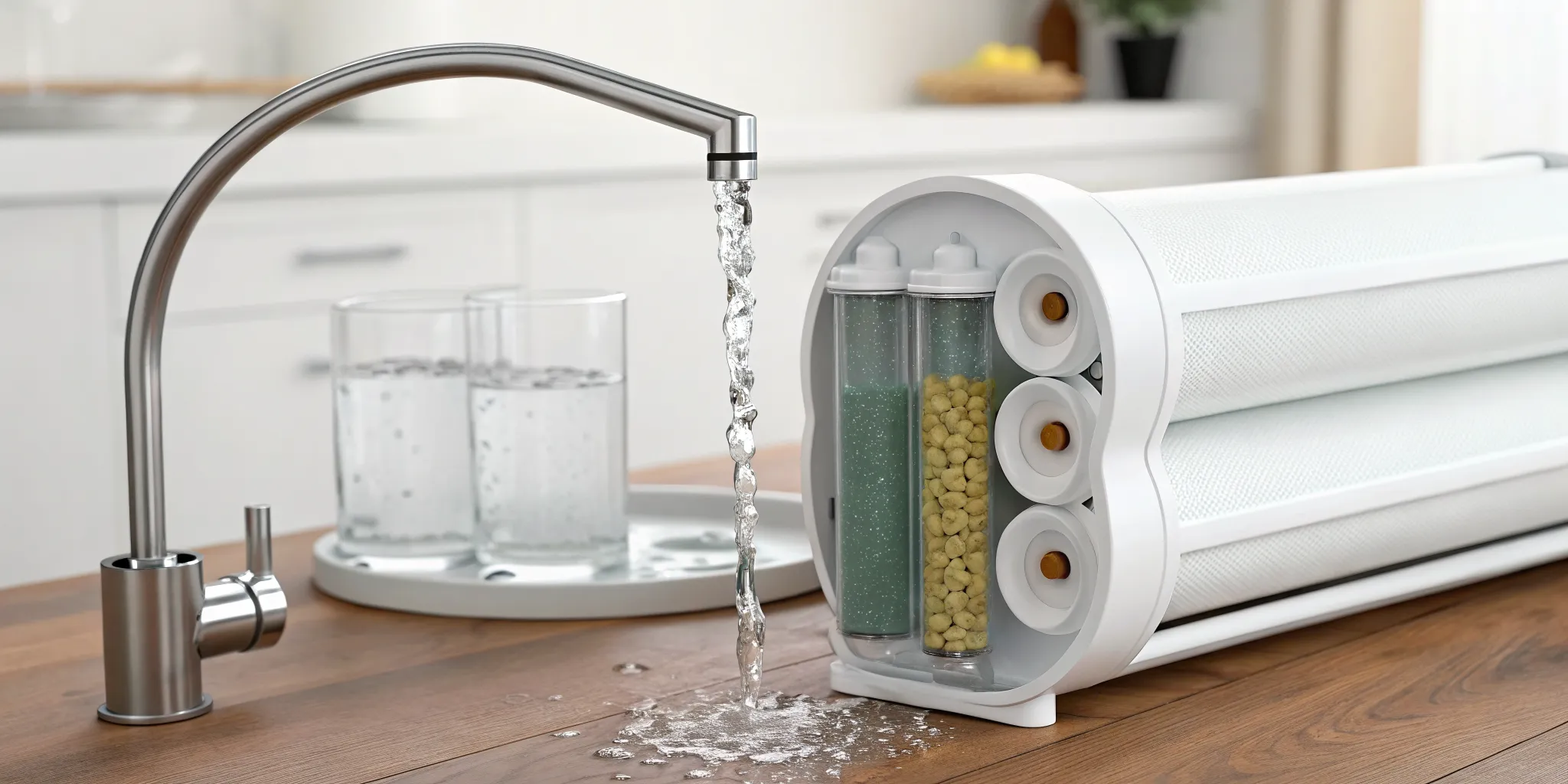
Are you constantly buying plastic water bottles or dealing with a filter pitcher that never seems to get the job done? There's a better way to get consistently pure, delicious water at home. A reverse osmosis (RO) system is an investment in your health, your wallet, and the environment, providing an endless supply of clean water while ending your reliance on single-use plastics. It's a simple upgrade that can completely change how you feel about your tap water. But before making a choice, it's important to understand what is reverse osmosis and the benefits it offers. This guide will walk you through the perks, from better-tasting coffee to the peace of mind that comes with removing harmful contaminants.
Need clear answers about your water? Schedule free water testing with Loon Lakes Water Systems before choosing equipment.
Key Takeaways
- RO provides deep filtration for pure water: The system uses a special membrane to physically block a huge range of contaminants that simpler filters leave behind, including dissolved solids, heavy metals, and chemicals.
- It improves taste and safety with simple upkeep: An RO system delivers great-tasting, safer water and helps you ditch plastic bottles, but it requires routine filter changes to maintain performance. You can also add a remineralization filter to improve the water's mineral content.
- Start with a water test to find the right solution: An RO system is not a one-size-fits-all fix and serves a different purpose than a water softener. A professional water analysis is the only way to know exactly what your water needs and choose the most effective system.
What Is Reverse Osmosis? A Simple Breakdown
Reverse osmosis, often just called RO, sounds like something you'd hear in a high school science class. But it's actually one of the most effective ways to get incredibly pure, great-tasting water right from a dedicated faucet in your kitchen. The technology works by pushing your tap water through a series of advanced filters to remove a huge range of contaminants. While the name seems technical, the process itself is pretty easy to understand once you break it down. It all starts with a basic natural phenomenon: osmosis.
First, Let's Talk About Regular Osmosis
To get "reverse" osmosis, you first have to know what regular osmosis is. Imagine a special barrier, like a super-fine screen, that separates two bodies of water. On one side, you have less concentrated water (like pure water), and on the other, you have more concentrated water (with things like salt or minerals dissolved in it). Osmosis is the natural tendency for the purer water to move through the barrier to dilute the more concentrated side. It's nature's way of trying to create balance. Think of how a plant's roots pull water from the soil; that's osmosis in action.
How the RO Membrane Filters Your Water
Reverse osmosis flips that natural process on its head. Instead of letting water move on its own, an RO system uses your home's water pressure to push tap water through a special filter called a semi-permeable membrane. This membrane is the heart of the system. Its pores are incredibly tiny, so small that they only allow water molecules to pass through. Everything else, like dissolved salts, lead, chlorine, and other impurities, gets blocked and can't make it to the other side. These rejected contaminants are then simply flushed down the drain, leaving you with exceptionally clean, purified water. It's a physical separation process, not a chemical one.
The Multi-Stage Filtration Process
A good reverse osmosis system doesn't just rely on one filter; it's a team effort. Most of our drinking water systems use a multi-stage process to ensure your water is as pure as possible. It typically works like this:
1. Sediment Filter: This is the first line of defense. It catches larger particles like dirt, sand, and rust that can make water cloudy and clog up the rest of the system. 2. Carbon Filter: Next, the water passes through a carbon filter. This stage is fantastic at removing chlorine, which improves the taste and smell of your water and protects the delicate RO membrane. 3. RO Membrane: Here's the main event. Water is forced through the RO membrane, which removes the vast majority of dissolved contaminants. 4. Post-Carbon Filter: Finally, the purified water gets one last polish from another carbon filter to remove any remaining subtle tastes or odors before it reaches your glass.
What Does Reverse Osmosis Actually Filter Out?
So, what exactly does that super-fine membrane in a reverse osmosis system catch? The short answer is: a lot. An RO system acts as a highly effective gatekeeper for your water, targeting a wide range of microscopic impurities that other filters might miss. It's one of the most thorough filtration methods available for home use. From dissolved solids that make your water taste strange to more serious contaminants, RO tackles them head-on. Let's break down what these systems are designed to remove.
Dissolved Salts and Heavy Metals
If you've ever dealt with hard water, you're already familiar with dissolved salts and minerals. These are the culprits behind limescale buildup on your faucets and soap that just won't lather. A reverse osmosis system is excellent at removing these dissolved solids, along with other total dissolved solids (TDS) that can give water an unpleasant taste. More importantly, RO systems are capable of filtering out heavy metals like lead, mercury, and arsenic. These contaminants can find their way into water supplies from old plumbing or industrial runoff, so having a reliable filter provides essential peace of mind.
Chemicals, Pesticides, and Herbicides
Here in Minnesota, we're no strangers to agriculture. While our farms are vital, they can also lead to agricultural runoff containing pesticides and herbicides that may seep into groundwater. An RO system is designed to remove these and other synthetic chemicals, including chlorine and some pharmaceuticals. By forcing water through its semipermeable membrane, the system separates these unwanted substances, leaving you with cleaner, purer water. If you're concerned about what might be in your local water, a free water test is the perfect first step to identify any issues.
Bacteria and Cysts
One of the biggest benefits of reverse osmosis is its ability to remove tiny microorganisms. The pores in an RO membrane are so small that they can block bacteria, viruses, and protozoan cysts like Giardia and Cryptosporidium from passing through. This significantly reduces the risk of waterborne illnesses that can come from contaminated wells or municipal water systems. While many city water supplies are treated, an RO system adds an extra layer of defense right at your tap, ensuring the water your family drinks is as safe as possible.
What an RO System *Doesn't* Remove
While RO systems are incredibly powerful, it's important to know their limitations. They are not always sufficient on their own if your water has significant bacterial or viral contamination. Because the membrane can degrade over time, some microorganisms might eventually get through. For this reason, experts often recommend you pair an RO system with a UV purifier, which uses ultraviolet light to neutralize any remaining bacteria and viruses. This combination creates a comprehensive solution for truly pure water. At Loon Lakes, we can help you determine if a multi-stage approach is the right fit for your home's specific needs.
Start with water testing.
Loon Lakes Water Systems helps Minnesota homeowners understand hardness, iron, sulfur odor, drinking water concerns, and equipment issues before recommending a solution.
Schedule Free Water TestingThe Perks of Having an RO System
Installing a reverse osmosis system does more than just filter your water; it can genuinely improve your daily life. From the first cup of coffee in the morning to the peace of mind you have at night, the benefits are clear. An RO system is an investment in your home's health, your family's well-being, and even your wallet. Let's look at some of the biggest perks you can expect when you have purified water right at your fingertips.
Enjoy Cleaner, Better-Tasting Water
The most immediate change you'll notice is the taste. RO water is crisp, clean, and refreshing because the system is so effective at removing the things that cause bad flavors and odors. It filters out up to 99% of dissolved solids, including chlorine, which is often responsible for that distinct "tap water" taste. This means no more strange aftertastes or cloudy water in your glass. Your coffee will taste richer, your tea will be clearer, and even your ice cubes will be crystal clear. It's a simple upgrade that makes a huge difference in how you and your family enjoy your water every single day.
Reduce Potential Health Risks in Your Water
Knowing your water is safe to drink provides incredible peace of mind. While Minnesota's water is treated, certain contaminants can still find their way into the supply from various sources. An RO system acts as a final, powerful barrier in your home. The US EPA notes that these systems are effective at removing harmful things like lead from old plumbing, naturally occurring arsenic, and industrial chemicals like PFAS. For families, especially those with young children or anyone with a compromised immune system, having this extra layer of protection at the tap is invaluable. It's about taking control of your water quality and ensuring what you drink is as pure as possible.
Save Money and Ditch Plastic Bottles
Your wallet will also thank you for making the switch. If you're constantly buying cases of bottled water, you know how quickly that cost adds up. An RO system is an investment that pays for itself over time by providing an endless supply of purified water right from your tap. You can finally stop spending money on single-use plastic bottles. Plus, there's a hidden benefit: RO water is free of the hard minerals that cause scale buildup. This means your coffee maker, ice machine, and other water-using appliances can run more efficiently and last longer, saving you from costly repairs or replacements down the road.
Make an Eco-Friendly Choice for Your Home
Choosing an RO system is also a great way to reduce your environmental footprint. Think about all the plastic bottles that end up in landfills and oceans each year. By filtering your water at home, you can completely eliminate your family's reliance on single-use plastic water bottles. It's a small change in your daily routine that contributes to a much larger positive impact. Furthermore, RO systems are a sustainable choice because they use fewer chemicals than some other water purification methods. Making the switch is a simple, effective way to live a little greener without sacrificing convenience or quality.
What to Consider Before Installing an RO System
A reverse osmosis system is a fantastic investment in your home's water quality, but it's helpful to go in with a clear picture of how they work day-to-day. Like any home appliance, there are a few practical things to keep in mind. Thinking about these points ahead of time ensures you'll be happy with your choice for years to come. Let's walk through the three main considerations: water usage, mineral content, and routine maintenance.
Water Usage and System Efficiency
One of the first things people learn about reverse osmosis is that the process creates wastewater. To flush away all the contaminants it catches, an RO system uses more water than what ends up in your glass. For every gallon of purified water produced, older or less efficient systems might send four or more gallons of brine, or wastewater, down the drain. This is a normal and necessary part of how the membrane separates impurities.
However, technology has come a long way. Modern, high-efficiency RO systems are designed to minimize this waste. When you work with a professional, they can recommend a system with a better recovery rate that fits your household's needs and conserves water.
Does It Remove Healthy Minerals?
Reverse osmosis is incredibly thorough. It's designed to remove tiny dissolved solids, which is why it's so good at filtering out things like lead, arsenic, and excess sodium. The flip side is that the membrane doesn't distinguish between "good" and "bad" minerals, so it also removes beneficial ones like calcium and magnesium. This can leave the water tasting a bit flat to some people.
Fortunately, there's a simple solution for this. Many modern RO systems can be equipped with a special remineralization filter. This post-filter adds a healthy blend of minerals back into the water right before it comes out of your tap, giving you pure water that also has a crisp, refreshing taste and balanced pH.
The Reality of Filter Changes and Upkeep
To keep your RO system working effectively, you'll need to replace the filters on a regular schedule. This isn't a huge task, but it is an important one. Generally, the pre-filters and post-filters need to be changed every six to 12 months, while the reverse osmosis membrane itself can last for two to three years. The exact schedule depends on your water quality and how much water you use.
Forgetting to change filters can reduce the system's efficiency and affect your water quality. That's why partnering with a local expert is so helpful. We keep track of your installation and can provide the right filters and long-term support to make maintenance completely worry-free.
Reverse Osmosis vs. Other Water Filters
"Water filter" is a broad term, and it's easy to get different systems confused. Reverse osmosis is a powerful filtration method, but it's not the only one out there. Other common solutions include water softeners, carbon filters, and UV purifiers. Each of these is designed to tackle a specific set of problems, so the best one for your home depends entirely on what's in your water. Think of it like using different tools for a home project; you wouldn't use a hammer to saw a piece of wood. The only way to know which tool you need is to understand the job ahead of you.
That's why we always recommend starting with a professional water analysis. A free water test gives you a clear, scientific picture of your water's quality. It identifies the exact minerals, chemicals, or contaminants causing issues like stains, bad tastes, or odors. This information is key to choosing the right solution. An RO system might be perfect, or you might find that a water softener or a different type of filter is a better fit. Let's compare RO to some other popular systems so you can see how they differ.
RO Systems vs. Water Softeners
The most common point of confusion is between RO systems and water softeners. Here's the main difference: a water softener *conditions* your water, while an RO system *filters* it. A water softener targets "hard" minerals like calcium and magnesium, which cause scale buildup and soap scum. It uses a process called ion exchange to swap those minerals for sodium ions. This makes your water "soft," but it doesn't remove a wide range of other contaminants. An RO system, on the other hand, physically removes contaminants. If you have a softener that adds sodium to your water, an RO system is excellent at taking it back out, as it can remove almost all of it along with other dissolved solids.
RO Systems vs. Carbon Filters
You're probably familiar with carbon filters, as they're found in many popular water pitchers and refrigerator filters. These filters are great at improving the taste and smell of your water. They work like a sponge with a huge surface area, using activated carbon to trap larger particles and contaminants like chlorine and some volatile organic compounds (VOCs). However, a reverse osmosis system provides a much more thorough level of filtration. Instead of just trapping particles, RO uses a semipermeable membrane and pressure to separate contaminants at the molecular level. This allows it to remove a far wider array of impurities, including dissolved solids, heavy metals, and fluoride, that carbon filters simply can't catch.
RO Systems vs. UV Purifiers
While RO systems are fantastic at removing contaminants, they have their limits when it comes to living organisms. If your water source is a private well or has a risk of biological contamination, you might need a UV purifier. A UV purifier doesn't remove anything from the water. Instead, it uses powerful ultraviolet light to scramble the DNA of microorganisms like bacteria, viruses, and cysts. This renders them harmless and unable to reproduce. An RO membrane can block some of these organisms, but it's not designed to be a foolproof barrier against them. For water that is microbiologically unsafe, you would need a UV light system to ensure safety, often paired with an RO system for comprehensive treatment.
Is an RO System the Right Choice for You?
Deciding on a water filtration system can feel like a big step, but it really comes down to your water and your goals. A reverse osmosis system is a powerful tool for purification, but it isn't necessary for every home. Let's walk through a few key questions to help you figure out if an RO system is the right solution for you and your family.
Telltale Signs You Need Better Filtration
If your tap water has a strange taste or odor that a standard pitcher filter can't fix, it might be time for a more robust solution. RO systems are excellent at removing a wide range of contaminants that affect taste and safety, including dissolved solids, salts, and heavy metals like lead and arsenic. They also tackle modern concerns like PFAS (often called "forever chemicals") and other synthetic chemicals. If you're worried about what might be lurking in your pipes or local water supply, an RO system offers peace of mind. The only way to know for sure what's in your water is with a professional analysis.
Common Water Issues Here in Minnesota
Here in Minnesota, our water can face different challenges depending on whether you're on a municipal supply or a private well. City water is treated with chlorine, which can leave an unpleasant taste and smell that an RO system easily removes. In more rural areas, concerns might shift to nitrates or pesticides from agricultural runoff. An RO system acts as a final barrier, ensuring the water you drink and cook with is exceptionally clean. While a water softener handles hardness minerals, an RO system targets the smaller, dissolved contaminants, giving you a complete approach to high-quality water throughout your home.
Who Gets the Most Out of an RO System?
Anyone who wants consistently pure, great-tasting drinking water can benefit from an RO system. It's a popular choice for families with young children, individuals with health sensitivities, and anyone tired of the cost and waste of plastic water bottles. If you're a coffee aficionado or a home chef, you'll notice an immediate improvement in the taste of your food and drinks. Beyond the home, many businesses rely on reverse osmosis systems where water quality is critical, including restaurants and coffee shops. Essentially, if top-tier water purity is your goal, an RO system is one of the most effective options available.
How to Choose the Best RO System for Your Home
Picking the right reverse osmosis system feels like a big decision, but it really comes down to your home's specific needs. The best system for you depends on what's in your water, how much filtered water you use, and your budget. Think about what you want to achieve. Are you just looking for better-tasting drinking water at the kitchen sink, or are you dealing with more widespread water quality issues? Answering that question is the first step. From there, you can look at different models and how they might work with other equipment you have. Let's walk through the key things to consider so you can feel confident in your choice.
Under-Sink or Whole-Home: Which Is Better?
The most common type of RO system is a point-of-use (POU) unit, which is typically installed right under your kitchen sink. This setup is perfect if your main goal is to have purified water for drinking and cooking. It connects to a dedicated faucet, giving you clean water right where you need it most. On the other hand, a point-of-entry (POE) or whole-home system treats all the water coming into your house. These are much larger and more complex, usually reserved for homes with significant water contamination issues. For most Minnesota families, an under-sink system provides the targeted filtration they need without the expense of a whole-home setup.
Key Features and Certifications to Look For
When you're comparing different RO systems, look for independent certifications to verify their performance. One of the most important labels to find is the EPA's WaterSense label. Systems with this label are certified by third-party testers to be more efficient, meaning they waste less water during the filtration process. A standard RO system can waste several gallons of water for every gallon it purifies, but a WaterSense-labeled model is designed to minimize that. This not only helps conserve water but can also save you a little money on your water bill over time. It's a simple way to spot a high-quality, efficient system.
Do You Need a Water Softener, Too?
If you have hard water, you might be wondering if you need both a water softener and an RO system. The two systems do different jobs, but they work together beautifully. A water softener removes hard minerals like calcium and magnesium, which protects your pipes and appliances. An RO system then takes over to filter out smaller contaminants, including the sodium that a softener can add to the water. This combination gives you the best of both worlds: soft water throughout your home and pure, great-tasting drinking water. The best way to know exactly what your water needs is to start with a professional water analysis.
Ready for Pure Water? Start with a Free Test
It's tempting to jump right into choosing a system, but the smartest first step is figuring out what's actually in your water. Before you invest in a reverse osmosis system, getting a clear picture of your water quality is essential. Think of it this way: you wouldn't take a medication without a diagnosis, and you shouldn't install a water filter without knowing what you need to filter out. A water test provides the exact data you need to make a confident and effective choice.
This initial step is so important because RO systems are designed to handle specific problems. They are incredibly effective at removing a wide range of impurities that can affect your water's taste, smell, and safety. In fact, the U.S. Environmental Protection Agency notes that RO can remove harmful contaminants like lead, arsenic, bacteria, and viruses from drinking water. Knowing if these are present in your supply is the key to deciding if RO is the right solution for you.
Reverse osmosis is also known for its impressive efficiency. A quality system can filter out up to 99% of dissolved salts, minerals, and other microscopic particles, leaving you with exceptionally clean water. But to get these results, the system needs to be matched to your water's unique chemistry. That's where testing comes in.
The good news is you don't have to guess. We can help you get the answers you need with a free water test right here in Minnesota. We'll come to your home, analyze your water on the spot, and give you a clear, honest breakdown of what we find. This way, you can move forward with a solution that's perfectly tailored to your home and family.
Frequently Asked Questions
I've heard reverse osmosis water can taste flat. Is that true? This is a common question, and there's some truth to it. Because RO is so effective at removing everything, it also takes out minerals like calcium and magnesium that give water its familiar taste. Some people describe the resulting pure water as "flat" or "too soft." The great news is that this is easily solved. We can add a remineralization filter to your system, which adds a healthy blend of minerals back into the water after it's purified. This gives you the best of both worlds: exceptionally clean water with a crisp, refreshing taste.
Does an RO system take up a lot of space under my sink? Most under-sink RO systems are surprisingly compact. They typically consist of a small storage tank and a set of filter cartridges. The whole setup usually takes up about the same amount of space as a small wastebasket, leaving you with plenty of room for cleaning supplies. During a professional installation, we make sure everything is placed neatly and efficiently so it doesn't interfere with your plumbing or storage.
If I already have a water softener, do I still need a reverse osmosis system? It's a great question because they do very different jobs. A water softener is designed to protect your entire home by removing hard minerals that cause scale buildup in pipes and on appliances. A reverse osmosis system provides a much higher level of filtration for the water you drink and cook with. It removes a huge range of contaminants that a softener doesn't touch, including the small amount of sodium a softener adds to the water. Think of them as a team: the softener protects your home, and the RO system perfects your drinking water.
How often do I really need to change the filters, and is it difficult to do? Regular filter changes are key to keeping your water pure, but it's not a demanding task. The sediment and carbon pre-filters usually need to be replaced every six to twelve months, while the main RO membrane can last two to three years. The exact timing depends on your water quality and usage. Changing them is typically a straightforward process, often just a simple twist-off and twist-on motion. When you work with us, we help you keep track of this schedule and can show you exactly how it's done, so maintenance feels completely manageable.
I'm concerned about the wastewater from an RO system. Is it really that much? It's smart to think about water usage. Reverse osmosis works by using water to flush away the contaminants it separates from your drinking water. While older systems could be inefficient, modern technology has improved dramatically. We recommend high-efficiency systems, especially those with an EPA WaterSense label, which are designed to minimize the amount of water sent to the drain. A professional can help you choose a system that provides pure water without being wasteful.
Ready for better water?
Call 612-930-0156 or request a free water test. We will explain what is in your water and help you choose the right next step.
Request Free Water Testing