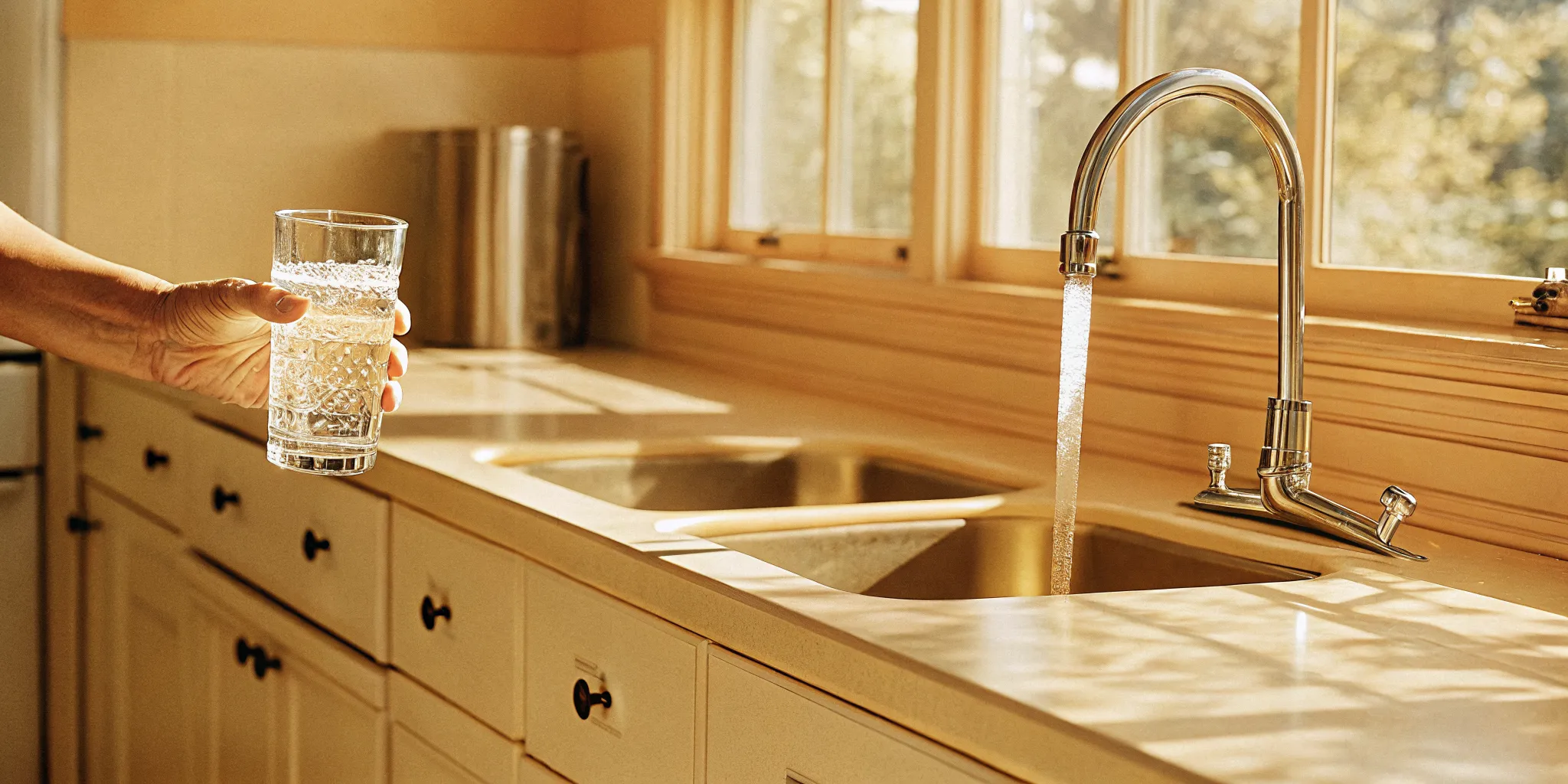
Filling a glass with milky, white water can be a startling sight for any Minnesota homeowner. While cloudiness looks alarming, the cause is often just harmless air bubbles trapped in your plumbing. You can usually find the root cause with one simple test at your kitchen sink.
Why is my tap water cloudy? This usually happens because tiny air bubbles get trapped in your pipes. Pressure changes or cold temperatures are often the cause. Most milky water is safe to drink and clears up on its own if you let a glass sit for a few minutes. However, constant cloudiness may be caused by high turbidity. This is a measure of water clarity. According to the Environmental Protection Agency, high turbidity means the water contains small particles like soil or silt. These particles can take up harmful pollutants and change your water chemistry. While air bubbles are harmless, constant cloudiness might show high levels of iron, manganese, or hard water minerals that need a special filter system. A professional test is the only way to confirm if your water contains harmless air or actual impurities.
Understanding the difference between air and silt helps you keep your family safe. To find the answer to why your tap water is cloudy, start with the glass test, which shows if the water clears from the bottom up. This visual check is the best first step. The path begins with a simple glass test.
Why is my tap water cloudy? Start with the glass test
Cloudy or milky water is a common sight in many Minnesota homes. It can look like someone poured milk into your sink. While it might look bad, it often comes from a simple cause. Many times, it is just small air bubbles trapped in your pipes. These bubbles get caught when water pressure changes or when cold water warms up. If your water looks cloudy, do not panic. Most of the time, the water is still safe to drink. But you should check to see if the cloudiness stays or goes away. The best way to find out is a simple test you can do at home.
How to do the clear-glass test
The glass test is the fastest way to see what is in your water. You do not need any special tools or kits for this. You just need a clean glass and a few minutes of your time. This test helps you tell if you have harmless air or real water issues. By watching how the water changes, you can find where the cloudy look comes from. It is a great first step before you call a pro or buy a filter.
- Get a clean, clear glass from your kitchen shelf.
- Turn on your cold water tap and let it run for a few seconds.
- Fill the glass to the top with the cloudy water.
- Set the glass on a flat surface like a table or counter top.
- Watch the water closely for two to three minutes without moving the glass.
- Look to see if the water starts to clear from the bottom or stays the same.
Reading your test results
If the water clears from the bottom to the top, you have air in your pipes. The milky look comes from thousands of tiny bubbles. As they rise to the top and pop, the water becomes clear again. This is a common cause of cloudy water that does not need a fix. It is mostly a sight issue that does not change the safety of your tap water. You might see this more often in the winter when cold water holds more air.
However, if the water stays cloudy or has bits floating in it, you have another problem. Water clarity is also called turbidity, and high levels can mean solids are in your water. These solids could be dirt, silt, or tiny bits of natural matter. Unlike air, these small bits will not go away on their own. They can even carry other bad things that stick to their surfaces.
When to check your water quality
Sometimes, cloudy water is a sign of bigger well water quality concerns or plumbing issues. If your water has a yellow, brown, or green tint, it is not just air. You might have iron or manganese in your system. You should also check for a film on the surface or a strange smell, like rotten eggs or chlorine. These signs often point to a need for a new filter or a water softener.
If your water does not clear up after the glass test, you need to find the root cause. A lasting cloudy look can be hard on your home machines and your skin. It can also leave spots on your dishes or stains in your sinks. You can schedule free water testing to get a clear answer about what is in your home's water. A local pro can test your water chemistry and show you how to fix it for good.
When cloudy water is just trapped air
You may go to your sink and find a glass of milky water. This sight can be a shock. You might ask, "why is my tap water cloudy?" In many cases, the answer is simple. Tiny air bubbles in the pipes often cause this look. These bubbles are harmless. They usually go away on their own after a few minutes.
How air gets into your pipes
Air can get trapped in your water lines for many reasons. A shift in pressure is a common cause. High pressure lets water hold more air. When you turn on the tap, the pressure drops. This change lets the air turn into small bubbles. It is like what happens when you open a bottle of soda.
Heat also plays a part. Cold water holds more air than warm water. During the winter, the water in your pipes may be very cold. As the water warms up in your home, the air leaves the water. This makes the glass look white at first. The US EPA calls this look turbidity. It is a measure of how clear the water is.
The simple glass test
There is an easy way to see if your water is just full of air. Fill a clear glass with tap water and set it on the counter. Watch it for a few minutes. If the water clears from the bottom to the top, then it was just air bubbles. The bubbles rise to the top and pop, which leaves the water clear.
If the milky look stays, there may be a real issue. This could mean you have silt or minerals in your lines. You should look for these signs of a problem:
- Grit or sand at the bottom of the glass
- Water that stays cloudy for more than five minutes
- Discolored water that looks brown, yellow, or green
If you see these signs, you should schedule free water testing to find the cause. Our team can tell if you have a harmless look or a true water make-up problem.
Plumbing and faucet issues
Your pipes or faucets might also be the source of trapped air. If you just had plumbing work done, air may have entered the pipes. Running your taps can help flush this air out. Faucet aerators are another factor. These small screens mix air with the water to save on your bill. If the aerator is dirty, it can cause more bubbles than usual.
Cleaning your aerator is a quick fix. You can unscrew it and rinse out any grit. If the water is still cloudy after this, the problem might be deeper. Most air issues are minor, but it is always best to be sure about your water quality.
Cloudy tap water causes compared
Many people ask why tap water is cloudy when they see a milky look in a glass. This white look can come from a few things in your home pipes. Some causes are harmless, but others may show a need for a new filter or softener. It is best to know what you see before you worry about your water safety.
Air bubbles or tiny particles
The most common cause of milky water is just air in your pipes. When water is cold or under high pressure, it can hold more air. As it comes out of the tap, that air forms tiny bubbles that make the water look white. If you let the glass sit for a few minutes, the bubbles will rise to the top and the water will clear. This is a harmless issue and does not change how safe the water is to drink.
If the water stays cloudy after it sits, you might have tiny particles in it. This is called turbidity. High turbidity means the water has things like silt, soil, or organic matter in it. These particles can sometimes carry other pollutants on their sides. If your water does not clear up, it is a good idea to find out what is in it.
Mineral buildup and hardness
If you live in Minnesota, hard water is a very common issue. Minerals like calcium and magnesium can make your water look cloudy when they build up. This often looks like a fine white film or sediment in your glass. You may also see spots on your dishes or scale on your faucets. These causes of cloudy water are not usually a health risk, but they can damage your pipes and water heater over time.
For those with a private well, cloudiness might come from other minerals like iron or manganese. These can make the water look yellow, orange, or even dark. They often leave stains in your sinks and tubs. If your well water looks milky or has a bad smell, you should look for signs of iron or sulfur. These well water issues often need a special filter to fix.
Comparing common causes
Use this table to help you find what might be causing your cloudy water.
| Cause | How it Looks | How it Clears | Action Needed |
|---|---|---|---|
| Air Bubbles | White or milky | Clears from bottom up in 2 minutes | None |
| Hard Water | Cloudy or white film | Leaves spots or scale on glass | Water softener |
| Sediment | Brown or grey tint | Particles settle at the bottom | Sediment filter |
| Iron or Manganese | Yellow or orange tint | Does not clear on its own | Iron filter |
When to test your tap water
You should not have to guess what is in your drinking water. If your tap water stays cloudy for more than a few minutes, it is time to look deeper. A test can tell the difference between a simple air issue and a real mineral problem. This is the best way to make sure your home water system is working right.
At Loon Lakes Water Systems, we follow a simple plan. We test first and then explain the results to you. If you are worried about your water quality, call us at 612-930-0156 or schedule free water testing to get a clear answer. This helps you choose the right fix without any high-pressure sales. Whether you need a simple filter or a full home system, the first step is always to find out what is in the water.
Could hardness or sediment make tap water cloudy?
When you see hazy water at your sink, your first thought might be air. While air bubbles are common, they usually clear up fast. If your water stays cloudy after it sits, you might have another problem. In Minnesota, many homes deal with minerals or tiny bits of debris in their pipes. These can make your tap water look thick or milky even when no air is there.
How hard water minerals create haze
Hard water is a common issue for local owners. It happens when high levels of calcium and magnesium dissolve into your supply. These minerals often lead to causes of cloudy water that do not settle out. You might notice a white haze in your glass or white spots on your clean dishes. Over time, these minerals turn into hard scale that builds up inside your pipes and machines.
This scale can also flake off and float in your water. If you see white bits that look like sand or salt, you are likely looking at mineral scale. This buildup can reduce water flow and make your tea or coffee look murky. Hardness is more than just a look; it can wear out your dishwasher and washing machine sooner than you expect.
Sandy sediment and pipe debris
Sometimes the cloudiness is not from minerals but from tiny bits of sediment. This can be soil, silt, or rust that enters your water from a well or a broken city pipe. High levels of these bits lead to water turbidity, which is a measure of how clear your water is. Turbidity makes the liquid look muddy or gray rather than milky white.
Sediment often settles at the bottom of your water heater. If you hear a popping or rumbling sound when the heater is on, it may be time to flush the tank. When these bits travel through your home, they can clog faucet aerators and showerheads. This leads to low water pressure and a gritty feel when you wash your hands or face.
Finding the right fix with water tests
It is hard to know fully what is in your water just by looking at it. Cloudy water from sediment needs a different filter than water that is cloudy from hardness. You need to know your water chemistry before you spend money on a new system. Testing is the only way to find out if you have minerals, silt, or something else in your lines.
We advise that you schedule free water testing to get the facts. A pro can check your supply and help you find a fix that works for your home. Whether you need a simple sediment filter or a whole-home softener, the right choice starts with a clear test result. This helps ensure your water is clean, clear, and safe for your whole family to use every day.
Municipal water and private wells need different checks
The first step in solving water issues is knowing your source. Your home likely gets water from a city utility or a private well. Both systems can have problems that make you wonder why is my tap water cloudy. While the symptoms may look the same, the causes and fixes often differ. Finding the right path starts with a look at how water enters your home.
Solving city water issues
If you use municipal water, the issue may start with the local utility firm. Most problems come from water main breaks or routine hydrant flushing. These events can stir up sediment in the pipes and lead to short-term cloudiness. Check your city website for utility notices or ask your neighbors if they see similar changes. If the issue is only at your house, it might be air trapped in your own pipes.
Air bubbles often make water look milky or white, but they usually clear after a short wait. This happens most often during the winter when the water is cold. Cold water holds more air than warm water. When that water warms up in your home, the air comes out as tiny bubbles. You should schedule free water testing if the haze stays after the water sits in a glass. Steady cloudiness on city lines could mean there is a break or a leak in your service line.
Checking private well systems
Private well owners in Minnesota face a unique set of tasks. Well water comes from underground aquifers and picks up minerals along the way. You may run into well water quality concerns related to iron, manganese, or sulfur. These minerals can make your tap water look hazy or give it a metallic taste. Sudden changes in clarity can happen after a heavy rain or local upkeep.
Work on your well pump or casing can also stir up silt and sand. If your water looks muddy, it likely has high turbidity. According to the EPA, turbidity is a measure of how clear your water is. High turbidity means there are many tiny particles floating in the water that scatter light. These particles can come from soil, silt, or organic matter. While turbidity itself is an eye-sore, it can signal that your well needs repair or better filtration.
When to test your water
You should never ignore cloudiness that does not go away. Harmless air bubbles clear from the bottom of a glass in a few minutes. If the water stays cloudy, you have a physical particle in your supply. These tiny solids can be a magnet for other bits. Particles can adsorb pollutants like metals, nutrients, and organic compounds. This can change your water chemistry and may even put your health at risk.
Testing is the best way to tell the gap between a harmless issue and a real threat. At Loon Lakes, we use a testing-first approach to help people in the Twin Cities. We analyze your water to find the exact cause of the cloudiness before we suggest a fix. This saves you money and ensures your system works right. Our team can help you check for iron, hardness, and other common Minnesota water problems. We provide clear answers so you can make the best choice for your family.
When should cloudy tap water be professionally tested?
If you wonder why is my tap water cloudy, you might feel worried about your health. Often, a milky look comes from tiny air bubbles in your pipes. These bubbles are harmless and vanish if you let the glass sit for a bit. But if the water stays murky or has other signs of trouble, it is time for a check. You should not have to guess if your home water is safe to use every day.
Persistent cloudiness and grit
Water that does not clear up can mean you have high turbidity. This term is a way to measure how clear your water is. High levels often come from small bits of soil, silt, or other dirt in the supply. These small bits can carry gunk like metals or plant matter into your glass. If your water always looks hazy, you likely need a filter to keep it clean and safe.
You might also notice grit or small flakes at the bottom of your sink or tub. These causes of cloudy water often link to high iron or hard water minerals. These issues can clog your pipes and wear down your water heater over time. A pro can find the source and help you pick the right tool to fix it. We focus on local Minnesota water issues, so we know what to look for in your home.
Changes in color or smell
Cloudy water is one thing, but color changes are a big sign of trouble. If your water looks yellow, orange, or brown, you likely have iron or manganese in your well. These minerals can leave tough stains on your clothes and your tubs. They also make your water taste like metal, which can ruin your meals and your coffee. You should not have to live with stained sinks or bad-tasting drinks.
A bad smell is another reason to call for a pro. If you smell rotten eggs, you may have sulfur in your supply. This gas is very common in Minnesota wells and can make your whole home smell bad. When you notice a new odor along with a hazy look, you should schedule free water testing. This helps you find out if the issue is just about how the water looks or a real problem.
Sudden shifts in water quality
If your water turns cloudy all at once, you should watch closely. A sudden change in your whole home often means a pipe broke or your well pump has a flaw. For well owners, a change in how the water looks can mean the water table shifted or the well casing is failing. These well water issues need a quick check to prevent more damage to your home.
You should also get a test if you just moved into a new home. Even if the water looks clear now, a pro can tell you what minerals are in it. At Loon Lakes, we believe you should test first and show you the facts. We offer a free water test to help you know just what is in your tap. This way, you can make a plan that fits your home and your budget without any stress.
Frequently Asked Questions
Is cloudy tap water safe to drink?
In most cases, cloudy or milky water is safe to drink because it is often just tiny air bubbles. These bubbles are harmless and will rise to the top and vanish if the water sits for a few minutes. If the cloudy look stays or if you see bits at the bottom, there may be a real water quality issue. You should get your water tested to make sure it is clean and safe for your home.
Why is my hot water cloudy from the tap?
Hot water often looks cloudy because it can hold more air than cold water. When water is heated, the air inside it grows and forms tiny bubbles. These bubbles make the water look white as it comes out of your sink. This is a normal change and does not mean your water is dirty. If the glass clears from the bottom up in a minute or two, the cause is just trapped air.
Does air in pipes cause cloudy water?
Yes, air trapped in your pipes is a very common reason for milky tap water. According to Loon Lakes Water Systems, this happens when air is under pressure. The air then escapes as tiny bubbles when you turn on the tap. This change is only about how the water looks and does not hurt your health. You can check this by filling a glass; if it clears quickly, air is the cause.
How long does it take for cloudy water to clear?
If the cloudy look is caused by air bubbles, the water should clear within one to two minutes. You will see the bubbles rise from the bottom to the top of the glass until the water is clear. If the water stays cloudy after a few minutes, the issue is likely due to dirt, minerals, or other bits. In those cases, you may need a filter to help make your water clear and clean.
Can hard water make tap water look cloudy?
Yes, high levels of hard minerals can cause your water to look cloudy. Long-lasting cloudiness or bits you can see often show water quality issues like hard water or iron. According to the EPA, high turbidity can also be caused by soil or plant matter in the water. Getting an expert test can help you find the cause and the right way to fix it for your home.
Ready to find the root cause of your cloudy water?
Leaving milky or cloudy water alone can lead to a thick layer of scale that clogs your pipes and ruins your home machines over time. If you do not find the cause of these water issues today, you may deal with costly leaks or broken pipes that cost a lot. Taking a simple step now to test your water quality will help you protect your home and ensure every glass you drink is safe.
Are you now ready to schedule free water testing to learn what is in your tap water and get a clear plan for your home? Call 612-930-0156 to talk to a local expert and get the healthy water your family needs for a better home today.