Installing a water softener is one of the best investments a Minnesota homeowner can make. It protects your plumbing, appliances, and skin from hard water damage.
Ready to solve your water pressure issues? Schedule Free Water Testing or call Loon Lakes Water Systems at 612-930-0156 today for professional assistance.
But what happens if you recently set up a new system and suddenly notice a weak trickle from your faucet? Experiencing low water pressure after water softener installation is a common but highly frustrating issue. Fortunately, most of these problems are straightforward to diagnose once you know where to look. By checking a few key components, you can pinpoint the source of the pressure drop and restore strong flow to your home.
Is It Normal to Have Low Water Pressure After Water Softener Installation?
Under normal conditions, a properly sized and correctly installed water softener should not cause a noticeable drop in household water pressure.
In a standard residential plumbing system, water pressure typically ranges between 40 and 60 pounds per square inch (PSI).
While a water softener does introduce a small amount of flow resistance, this drop is usually negligible. It typically measures less than 2 to 3 PSI. This minor difference is completely imperceptible at the faucet or showerhead. Installing a high-quality unit like those mentioned in our guide to the best water softener systems can prevent these flow issues from ever occurring.
However, if your water flow has slowed to a crawl, this is not normal. A significant drop in water pressure after a new installation points to an active restriction somewhere. In many cases, the problem lies in how the unit was integrated into the home's plumbing. Minnesota has strict plumbing codes designed to ensure adequate flow rates, but improper DIY installations can easily lead to restrictions that strangle your water supply.
Could a Partially Closed Bypass Valve Be the Cause of Your Low Pressure?
If you experience low pressure immediately after installation, check the system's bypass valve first. The bypass valve is a mechanical switch located at the back of the unit. It allows you to divert water away from the softening tank and directly into your home's main water lines.
During installation, the technician must turn this valve to the "service" position. If the valve was left partially closed, it acts like a partially closed faucet, choking off your water flow.
To safely troubleshoot your bypass valve, follow these sequential steps:
- Locate the bypass valve: Find the valve assembly at the rear of the water softener unit.
- Identify the valve type: Determine if your system uses a single push-button, a rotary dial, or a three-valve manifold.
- Check the service position: For single-valve systems, ensure the handle is pushed or turned completely into the "service" position.
- Verify three-valve manifolds: Make sure the inlet and outlet valves are fully open, and the center bypass valve is tightly closed.
- Test the water pressure: Run a nearby faucet to check if the water pressure has returned to normal.
To help you quickly identify pressure drop causes, use this comparison table of common system checks:
| Component Checked. | Key Symptom of Failure. | Recommended Action. |
|---|---|---|
| Bypass Valve. | Pressure drops instantly across all home faucets. | Push or turn the valve completely into the service position. |
| Sediment Prefilter. | Gradual pressure drop, dark brown filter cartridge. | Replace the filter cartridge or flush the housing. |
| Resin Bed. | Pressure drops and water feels hard or rust-stained. | Run a manual regeneration or perform a deep resin flush. |
Are Clogged Sediment Prefilters Blocking Your Well Water Flow?
For Minnesota homeowners who rely on a private well, sediment is a constant challenge. Private wells in regions like Hennepin County or Anoka County often draw from aquifers rich in fine sand, silt, and iron rust particles.
When a new water softener is installed, it is standard practice to install a sediment prefilter just before the softener inlet. This prefilter protects the delicate internal control valve and resin bed from becoming fouled by debris.
However, the plumbing disruption caused by installing a new water softener often rattles loose years of accumulated rust and sediment. This sudden surge of loose debris can quickly clog a brand-new sediment prefilter within hours of the installation, creating a severe bottleneck.
If you notice your pressure drop shortly after installation, check the prefilter cartridge. A heavily discolored, dark brown, or orange-stained cartridge is a clear sign of clogging. Replacing the filter cartridge or flushing the prefilter system will often restore your water pressure immediately.
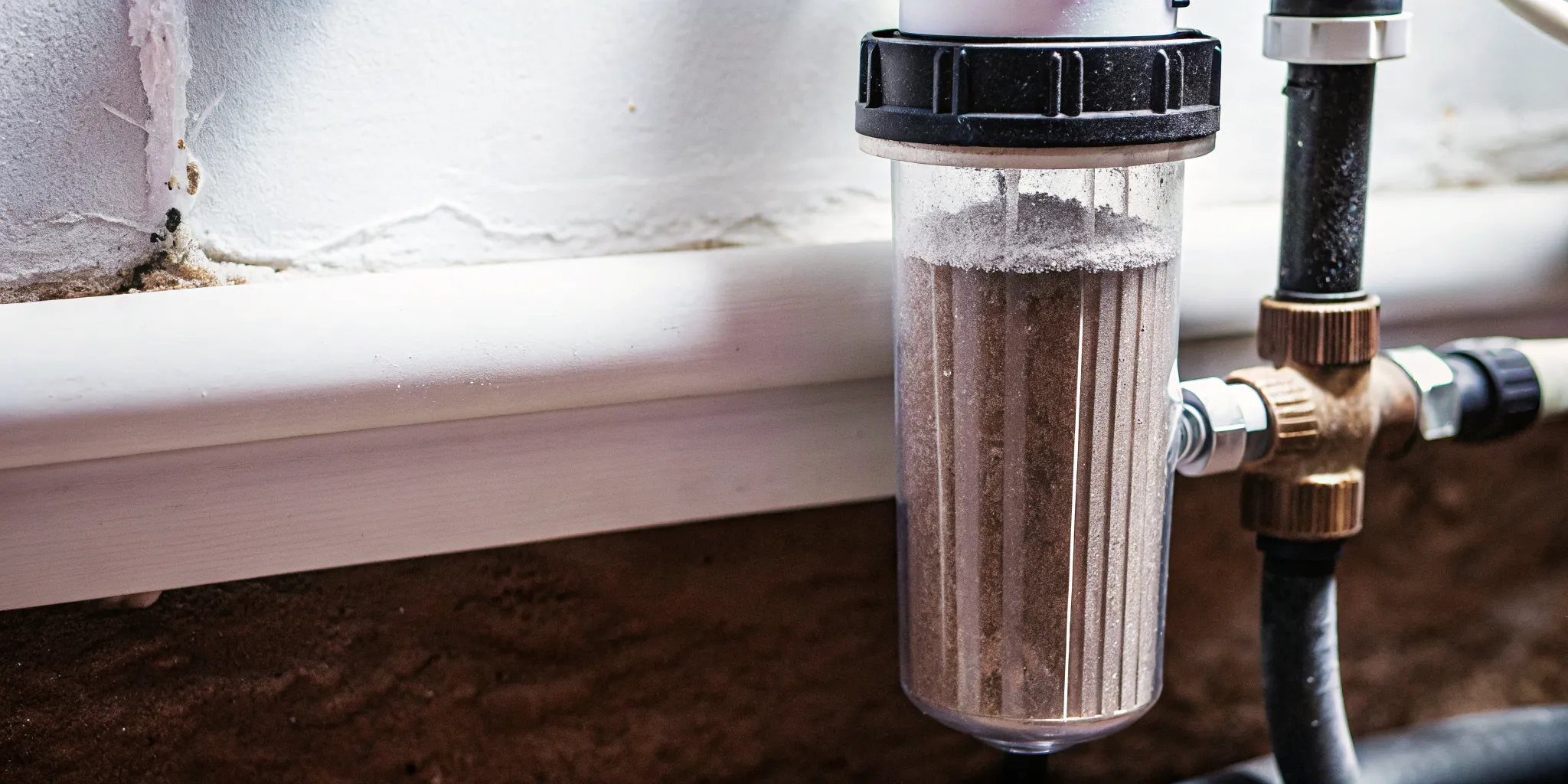
Here are the primary signs that your sediment prefilter has become clogged after a new installation:
- Sudden pressure loss: Water pressure drops dramatically within days of the water softener setup.
- Visual discoloration: The filter cartridge appears dark brown, orange, or heavily coated in debris.
- Sputtering faucets: Air or sediment is visible when you first turn on your kitchen or bathroom taps.
Dealing with private well water problems?
Book your free water analysis with Loon Lakes Water Systems. We will analyze your iron and hard water levels and help you get clean, reliable water pressure.
Book Free Water AnalysisIs your well water pressure drop driving you crazy?
Call Loon Lakes Water Systems at 612-930-0156 to discuss your water softening system's flow issues with our local MN experts, or request a free water quality test today.
Request Free Water TestHow Do Undersized Systems and Pipe Restrictions Strangle Your Water Flow?
A water softener must be carefully matched to both the hardness of your water and the flow rate demands of your household. Sizing is not just about the salt tank capacity. It is about the physical flow capacity of the control valve and the resin tank.
If a water softener is undersized for your home, it will act as a physical bottleneck. When multiple plumbing fixtures are used simultaneously, an undersized softener simply cannot pass water fast enough to meet the demand.
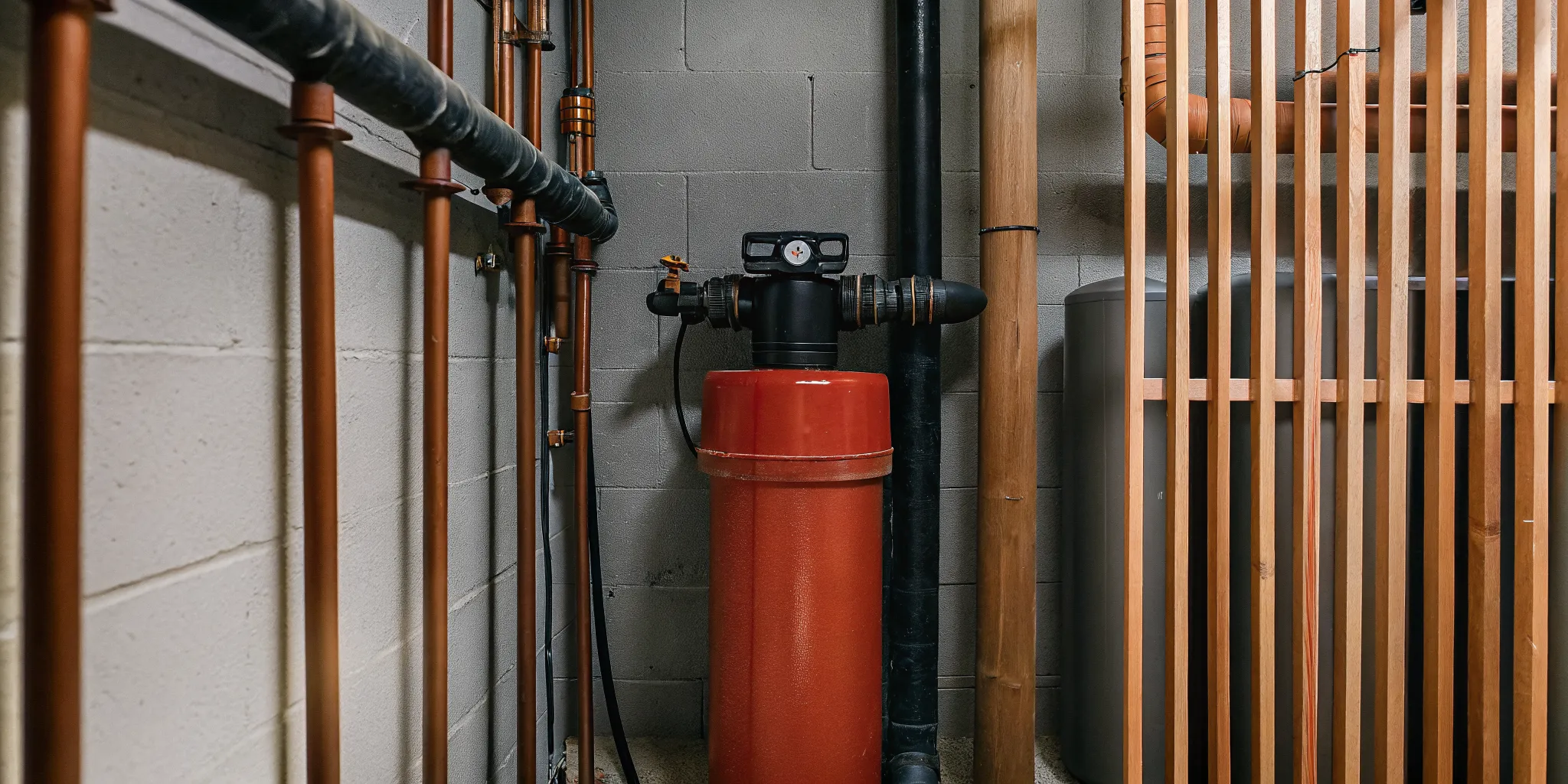
If your current unit is too small, check out our water softener replacement guide to size your unit correctly and maintain robust flow rates.
Plumbing pipe sizes also play a critical role in maintaining adequate water pressure. Many older homes in Minnesota were built with smaller pipes. If a water softener with a restrictive internal bypass is plumbed into a main line, it creates a permanent restriction.
To prevent this, professional installers always select a water softener with a matching valve size to ensure consistent plumbing diameters. If your system was installed using undersized pipes, you may need a professional water softener repair and installation specialist to re-pipe the connection to meet local flow standards.
Clogged Resin Beds or Internal Control Valve Issues
At the heart of every water softener is the resin tank, which is filled with millions of microscopic plastic beads. These beads carry a negative electrical charge. They attract and hold onto the positively charged calcium and magnesium ions that make water hard, exchanging them for sodium ions.
Over time, these beads must be cleaned through a regeneration cycle. This cycle flushes the resin bed with a concentrated saltwater brine solution.
However, if your incoming water contains high levels of iron or manganese, these minerals can coat the resin beads. This is extremely common in Minnesota well water. The minerals form a dense, sticky sludge that blocks the spaces between the beads, restricting water flow and causing a severe pressure drop.
Additionally, if the water softener's internal control valve malfunctions during setup, it may fail to complete a full regeneration cycle. This leaves the resin bed packed with trapped minerals and sediment.
If you suspect your resin bed is fouled, test this by placing the unit in bypass mode. If your water pressure returns to normal while bypassed, the restriction is inside the resin tank. The system likely requires a professional diagnostic check or a deep resin cleaning. Before making a decision to overhaul your setup, read our comparison on water softener repair vs replacement to find the most cost-effective path.
When to Call a Professional: Diagnostics Before Costly Repairs
While checking your bypass valve and prefilter are excellent first steps, attempting to disassemble a control valve without training can be dangerous. It may also void your equipment warranty. If basic troubleshooting does not restore pressure, it is time to call in a professional water treatment specialist.
At Loon Lakes Water Systems, we follow an education-first approach: "Test first. Explain clearly. Install correctly." Our experienced technicians will systematically test your water pressure before and after the softener.
We isolate the unit to verify the exact location of the restriction. We also check for hidden plumbing issues like corroded pipes or incorrect pipe sizing. We prioritize clear diagnostics so you understand exactly what is causing the low water pressure before we perform any repairs. Whether your system needs a simple valve replacement, a professional resin flush, or re-piping, our team ensures the job is done right.
Don't guess on water treatment.
Request a free water test with Loon Lakes Water Systems. Call 612-930-0156 to have our local experts inspect your system and restore your water pressure.
Request Free Water TestFrequently asked questions
Can a water softener cause low water pressure?
Yes, a water softener can cause low pressure. This happens if it is undersized, the bypass valve is partially closed, or the prefilter or resin bed is clogged.
How do you fix low water pressure after a water softener installation?
First, check the bypass valve. Ensure it is fully open in the service position. Next, check and replace your sediment prefilter cartridge. If these steps do not work, contact a professional.
How long does it take for water pressure to return to normal?
Once the restriction is removed, your home's water pressure should return to normal immediately. If your system is recovering from a manual regeneration cycle, it may take one to two hours.
What is the most common cause of low water pressure in a water softener system?
The most common cause is a clogged sediment prefilter. Another cause is a fouled resin bed. This is extremely common on systems that use private well water with high iron content.
Is 40 psi considered too low for water pressure?
A water pressure of 40 PSI is at the lower end of the standard healthy residential range. While 40 PSI is safe, many homeowners prefer a pressure of 50 to 55 PSI.
Choose Loon Lakes Water Systems for Expert Water Treatment Services
At Loon Lakes Water Systems, we believe that every Minnesota homeowner deserves abundant, clean, and high-pressure water. We have served families across the Twin Cities metro area with honest, transparent, and expert water softening, iron filtration, and water softener repair and installation services. If you are struggling with low water pressure after a recent installation, our team is ready to help you diagnose and resolve the issue quickly and professionally. Contact us today to schedule your free water test or to speak with one of our local water specialists.