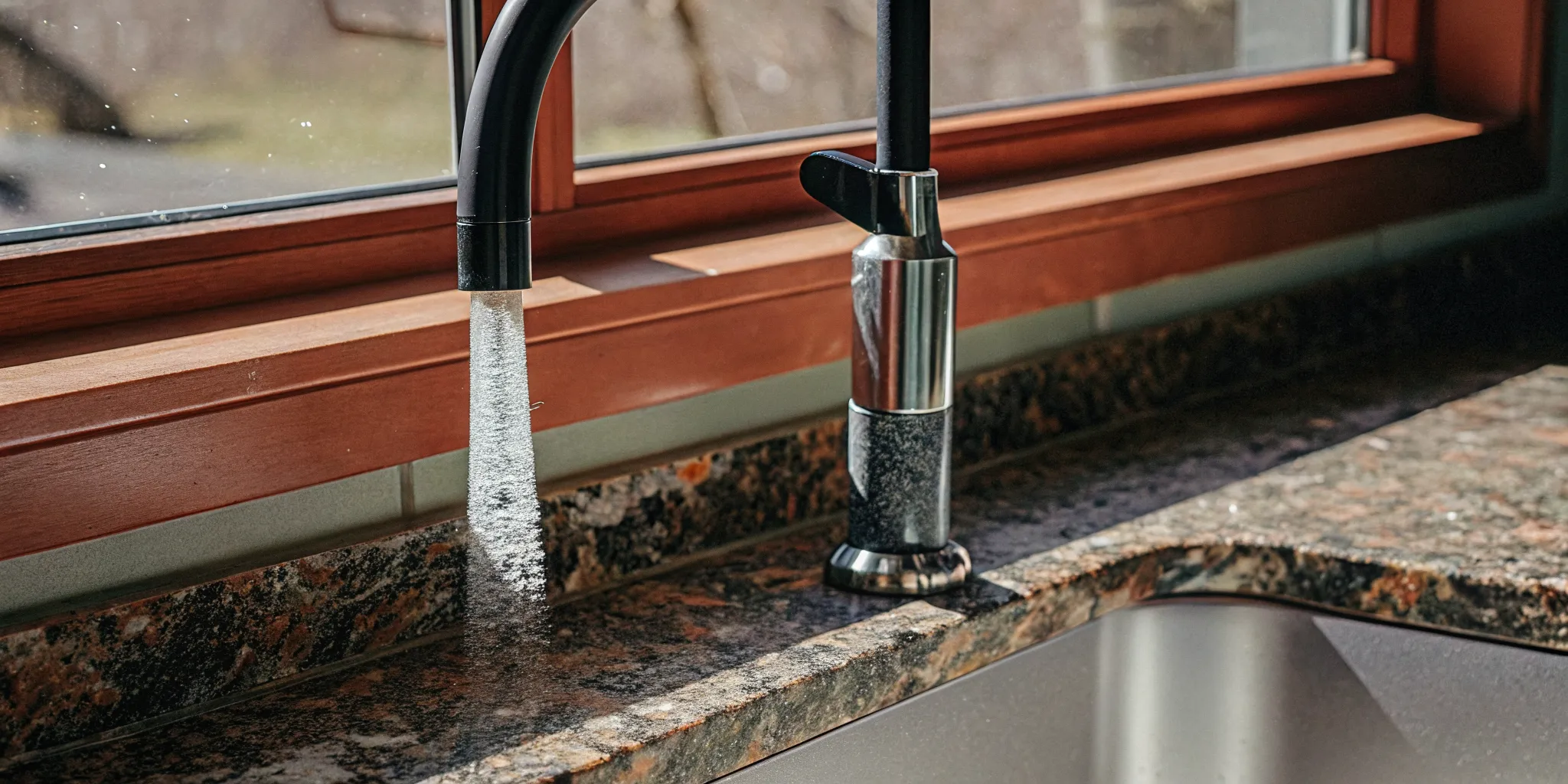
White residue on faucets is a common household problem caused by high levels of dissolved calcium and magnesium in your water supply. When this "hard water" dries, it leaves behind crusty mineral deposits known as limescale that can clog your faucets and damage your fixtures over time. These minerals also react with soap to create a sticky curd that clings to dishes, shower walls, and laundry. According to the EPA, water with hardness over 180 mg/L is very hard and often leads to heavy scaling. Most people in the Twin Cities deal with these issues because of the minerals found in local ground water. Testing your water is the only way to find the exact mineral count and choose the right system for your home.
White Residue On Faucets: What is the White Residue on Your Faucets and Dishes?
Have you ever seen white, chalky spots on your clean dishes? You might also notice a hard, crusty buildup on the tips of your kitchen or bathroom taps. This white residue on faucets and dishes is very common for people in the Twin Cities area. It can be hard to scrub away and often comes back soon after you clean it.
You may see this residue in several places around your home, including:
- White spots on glasses and silver after they dry.
- A cloudy film on shower doors and wall tiles.
- Crusty buildup on faucet heads and shower sprayers.
- Stiff or dull-looking clothes after you wash them.
Why these mineral spots form
The white film is mostly made of minerals like calcium and magnesium. These minerals are found in high levels in the groundwater across much of Minnesota. When water dries on a surface, the water goes away, but the minerals stay behind. Over time, these minerals build up and form a hard layer called scale.
This scale happens when minerals move out of the liquid and turn into a solid crust. Research from the University of Nebraska-Lincoln shows that hard water contains high amounts of these minerals. This buildup can hide in your faucet aerators, which can slow down your water flow. It also makes it hard for your soap to work well, so you have to use more to get things clean.
Is this white crust a safety concern?
Seeing a thick, white crust on your fixtures can be a bit scary. But these mineral deposits are not a health risk for you or your family. Most people find them to be a big nuisance because they make the kitchen and bathroom look dirty. The minerals can also make your drinking water have a dry or metallic taste.
The EPA treats these minerals as a minor concern. They set rules for things that affect how water looks, smells, or tastes. Even though these minerals are safe to drink, they can still cause big problems for your home. They can clog your pipes and make your appliances wear out much faster than they should.
Signs you need to test your water
If you see white residue on your faucets, it is a clear sign that your water is hard. You might also notice that your laundry feels stiff or your skin feels itchy after a shower. These are all signs of high mineral levels in your supply. At Loon Lakes Water Systems, we help local families find the exact cause of these issues.
The best first step is to test for hard water in your home. A simple test will show you how many grains of hardness are in your water. This data helps you decide if you need a water softener or a different type of filter. Knowing what is in your water will help you protect your home and keep your fixtures looking new.
Is It Hard Water? Understanding the Science Behind the Scale
Water hardness is determined by the concentration of dissolved calcium and magnesium. It is measured in grains per gallon (gpg) or parts per million (ppm). Ground water picks up these minerals as it filters through limestone. Minnesota groundwater is naturally high in calcium, making water hardness a widespread household issue.
Most people in Minnesota know that hard water is common, but few know the science behind it. When we call water "hard," we mean it has high levels of minerals like calcium and magnesium. These minerals are not a health risk, but they are a big nuisance in your home. Research from the University of Nebraska-Lincoln shows that these minerals can lead to scale buildup on your pipes and fixtures.
This buildup often shows up as white residue on faucets and dishes. It happens because the minerals stay behind after the water dries. Over time, these small spots turn into a thick, crusty layer. This scale can block the flow of water and make your kitchen look dirty even after you clean. If you see these signs, it is a good idea to test for hard water to find out how much mineral content you have.
How minerals turn into scale
The process of forming scale is a simple chemical reaction. When water with high mineral content is heated or left to dry, the minerals "fall out" of the liquid. This forms a solid material called calcium carbonate. This is the same stuff found in chalk or limestone. It sticks to metal surfaces and glass, which is why you see white residue on faucets and dishes so often.
Hard water also changes how your soap works. Instead of a rich lather, the minerals bind with the soap to make a sticky curd. This is what we call soap scum. It sticks to your skin, your hair, and your tub. This reaction makes it much harder to get clean and uses up more soap. This is why many local families look for the best water softener system to keep their homes running well.
Checking water hardness levels
We check water hardness in two main ways. The first is grains per gallon (gpg), and the second is parts per million (ppm). One grain per gallon is about 17.1 ppm. These numbers help you pick the right tools to treat your water. The Environmental Protection Agency (EPA) notes that water with more than 10.5 gpg is hard.
In many parts of Minnesota, hardness levels can go much higher than that. High hardness can cause big problems for your water heater and dishwasher. The scale acts like a thick coat. This means your machines have to work harder to heat the water. This can lead to higher energy bills and a shorter life for your appliances. If you are worried about your water, check the Centers for Disease Control and Prevention (CDC) guide on home treatment.
Testing your water is the only way to know the exact mineral levels in your supply. Once you have your results, you can decide if you need a softener or a filter. Most people find that treating their water saves money on repairs and cleaning supplies. It also keeps your faucets looking shiny and new without the need for constant scrubbing.
How Scale Buildup Silently Damages Your Fixtures and Appliances
Hard water minerals form a solid layer of limescale when heated or dried. This scale acts like insulation on water heater elements, making them draw more energy and fail prematurely. It also clogs faucet aerators, restricts water flow, and leaves sticky scum that ruins appliance pumps and seals.
Hard water is more than just a chore that leaves spots on your dishes. It has high levels of dissolved calcium and magnesium. As this water moves through your home, these minerals settle on surfaces. Over time, they create a hard, rock-like layer. Most people call this limescale. This buildup can hide inside your pipes and machines. It causes damage that you cannot see until a part fails.
The hidden cost to water heaters
Your water heater is often the first place to suffer from hard water. When you heat water, calcium settles out of the liquid. This creates limescale buildup inside the tank. This layer of rock acts like a blanket on the heating parts. It forces the heater to work longer and hotter to reach the right heat. This extra work uses more power. It also makes the unit wear out much faster than it should.
Many Minnesota homeowners deal with very hard water from wells or city lines. If you notice your hot water taking longer to warm up, it might be time to schedule free water testing. Finding the mineral level early can help you save your heater. Without a fix, scale can clog the pipes. This will lower the use and life of the machine.
Damage to faucets and shower heads
A common sign of hard water is a crusty white residue on faucets. This mineral crust does not just look bad. It can clog the small holes in your shower heads and taps. This leads to low water pressure and poor spray patterns. If left alone, the scale can ruin the finish on your fixtures. This can lead to leaks and the need for new parts much sooner than expected.
You can use whole home water conditioning to stop this damage before it starts. By removing the minerals at the main line, you keep the water soft in the house. This protects every tap and pipe from the slow drip of mineral damage. It also stops sticky soap scum from forming on your shower walls and glass doors.
Dishwashers and washing machines
Machines that use water to clean also take a hit. Scale can build up in the pumps, hoses, and arms of your dishwasher. This stops water from flowing as it should. It leaves your dishes dirty or spotty. In washing machines, the minerals can stay in the cloth of your clothes. This makes them feel stiff and look dull. Protecting these machines helps them run better. It also makes them last for years, which saves you money on repair bills.
Hard Water vs. Soap Residue: How to Tell the Difference
Mineral scale is a hard, rocky, or chalky deposit that forms as hard water dries on metal or glass surfaces. Soap residue is a sticky, greasy, or waxy film that forms when soap reacts with minerals in hard water. An easy vinegar test helps identify if the buildup is scale or soap scum.
When you spot a white film in your sink, you might wonder what it is. It often looks like a chalky paste or a crusty layer. This film usually comes from two sources: mineral scale or soap scum. Knowing the difference helps you pick the right way to clean it. While both leave white residue on faucets and dishes, they have very different causes.
How mineral scale forms
Mineral scale is a hard, rocky buildup. It happens when minerals like calcium stay behind as water dries. Scientific data shows that hard water contains high levels of dissolved calcium and other minerals. Over time, these minerals turn into a solid crust. This scale often feels rough and sticks to metal parts. It does not wash away with just soap and water.
The source of soap residue
Soap residue, or soap scum, is a sticky film. It forms when soap joins with the minerals in your water. Studies from the University of Nebraska-Lincoln show that soap used in hard water creates a sticky curd. This residue feels waxy or greasy rather than hard. It usually builds up on shower walls, tub edges, and tile grout. Unlike scale, soap scum may smear if you rub it with your finger.
| Feature. | Mineral Scale. | Soap Residue. |
|---|---|---|
| Texture. | Hard, crusty, or chalky. | Waxy, sticky, or greasy. |
| Location. | Faucets, valves, and kettles. | Shower walls, tubs, and tiles. |
| Main Cause. | Calcium and magnesium buildup. | Soap mixing with minerals. |
| Easy Test. | Does not smear or wipe off. | Can be smeared with a finger. |
| Acid Test. | Fizzes when touched by vinegar. | Does not fizz or react. |
Testing your water at home
You can tell these apart by using a simple home test. Put a few drops of white vinegar on the white crust. If it fizzes, it is likely calcium scale. If nothing happens, it is probably soap scum. To find a real fix, you should test for hard water using a kit. This will show you exactly how many minerals are in your water. Knowing your water's hardness is the first step toward clear pipes and clean sinks.
How to Remove White Residue From Your Faucets Naturally
To remove mineral residue naturally, soak a cloth in distilled white vinegar and wrap it around the faucet for one hour. The mild acetic acid dissolves the calcium scale, allowing it to be easily scrubbed away. A baking soda paste provides a gentle abrasive for stubborn spots.
Cleaning the white residue on faucets does not need heavy cleaners. You can use common pantry items like white vinegar and baking soda to clear mineral scale. These safe acids break down the calcium and magnesium that cause the crusty spots. While these tips help today, a long-term fix starts with expert Free Water Testing to find the source of your hard water.
Use a Vinegar Soak for Heavy Buildup
White vinegar is a safe and cheap way to clear mineral scale. The acid in the vinegar works to soften the hard spots so they wipe away well. This way is great for the tip of the faucet or the base where water often pools. If you have light buildup, letting it sit for about 30 to 60 minutes is often enough to see results. For best results, use distilled white vinegar. This type is strong and clear, so it will not stain your sinks. If the scale is very thick, you may need to soak it a few times to get the metal shiny again.
- Soak a small towel or cloth in pure white distilled vinegar.
- Wrap the wet cloth around the areas of the faucet with white spots.
- Secure the cloth with a rubber band to keep it in place.
- Let the vinegar sit for at least one hour or all night for heavy crust.
- Remove the cloth and scrub the spots with a soft brush.
- Rinse the faucet with clean water and dry it with a soft towel.
Apply a Baking Soda Paste for Stubborn Spots
For spots that do not come off with vinegar alone, you can make a cleaning paste. Mix three parts baking soda with one part water or vinegar to form a thick mix. Spread the paste over the white residue on faucets and dishes and let it sit. The baking soda provides a gentle scrub while the acid helps lift the minerals from the metal surface.
The EPA lists scaling as a common visual issue that does not harm health but can damage fixtures. If you find yourself cleaning these spots every week, your home likely has high mineral levels. A white residue on faucets is a clear sign that you need to look at your water quality. Knowing what is hard water can help you know why these spots keep coming back.
Clean Your Faucet Aerator
Mineral scale often hides inside the faucet aerator. This is the small screen at the end of the spout that mixes air with water. When it clogs, you may notice a weak flow or water spraying in odd directions. Cleaning the aerator can help restore full pressure and stop splashing.
You can unscrew the aerator by hand or with a pair of pliers. Place the parts in a small bowl of vinegar for a few hours. This dissolves the buildup inside the tiny holes. When you take the aerator apart, pay close care to the order of the parts. There is often a small rubber ring and a mesh screen. Make sure these are clean before you put them back. According to the CDC, steady care is key to keeping home water systems running at their best.
Why Testing is the Critical First Step to Solving Water Problems
Water testing is the critical first step because it measures your water's exact mineral content. Knowing the grains of hardness or parts per million (ppm) helps you select the correct treatment system. Testing removes the guesswork, saving you money on ineffective filters or over-sized water softeners.
When you see white residue on faucets, your first thought is often how to scrub it away. You might reach for a cleaner or use vinegar to clear the crust. While cleaning helps for a day or two, the spots usually come back. This is because the residue is just a sign of a deeper issue in your water supply. To fix the problem for good, you must first know exactly what minerals are in your water.
Stop the Guessing Game
Many owners try to solve water issues by guessing. They buy new soaps or try a DIY filter without knowing their water's makeup. But water hardness varies a lot between cities and even areas. Some homes have high levels of calcium, while others deal with iron or sulfur. If you buy a system that is too small or the wrong type, you waste money and the spots remain. An expert test for hard water takes the guesswork out of the process.
A good test shows the exact level of minerals in your water. Hardness is often measured in grains per gallon. Knowing this number is the only way to pick the right tools for your home. Without a test, you might use too much salt or not enough filtration. Testing gives you the facts you need to make a smart choice for your family and your budget.
Protect Your Home with Data
Minerals like calcium and magnesium do more than just leave spots on your sink. They can also build up inside your pipes and tools like your dishwasher. Over time, this scale reduces how well your water heater works and can even lead to leaks. The CDC recommends routine testing of your tap water to find out what it contains. This data helps you choose a system that stops damage before it starts.
When you have the right data, you can protect your dishwasher and laundry machine. These tools cost thousands of dollars to replace. Stopping mineral buildup helps them last longer and run better. By testing first, you ensure your water treatment system is set up to handle the needs of your home's plumbing.
Your Twin Cities Water Experts
At Loon Lakes Water Systems, we follow a simple rule: test first, then explain. We know the unique water challenges faced by Twin Cities homeowners. Every city in Minnesota has different groundwater, so a one-size-fix rarely works. Whether you have white residue on faucets and dishes or orange stains in your tub, a test is the starting point. We look at the makeup of your water to see if you need a softener, a filter, or a full conditioner.
We offer a free water test to help you understand your choices. Our team visits your home and provides a clear report on what we find. We do not use high-pressure sales tricks. Instead, we give you the facts so you can decide what is best for your home. Testing is the only way to move from quick cleaning to a long-term fix for your water quality.
Frequently Asked Questions
What is the white residue on my faucets?
The white residue on faucets is usually a mix of minerals like calcium. As water sits on your taps and dries, these minerals stay behind. They form a hard, chalky layer that can be tough to scrub. According to the LibreTexts project, this happens when minerals fall out of the water. This buildup shows that your home likely has hard water issues.
How do you remove white mineral buildup from faucets?
You can use a mild acid like white vinegar to clean these spots. Soak a cloth in vinegar and wrap it around the faucet for one hour. The acid helps break down the hard minerals so you can wipe them away. For very tough spots, a mix of baking soda and vinegar can help. Experts at Ackerman Plumbing suggest letting this sit for up to sixty minutes for the best results.
Can I prevent white residue from returning on my faucets?
Yes, you can stop this residue from coming back by treating your water. A water softener is the best way to fix this problem. These systems remove the minerals that cause the white crust before they reach your taps. The CDC notes that water softeners are a valid way to treat hard water. Using a softener will keep your faucets and dishes clear of chalky spots and help your pipes last longer.
Are white hard water deposits harmful to your health?
Hard water minerals are not a risk to your health. They are mostly a nuisance that can ruin your taps and pipes. While the white crust looks bad, it does not make your water unsafe to drink. According to the University of Nebraska-Lincoln, hard water is not a health risk. Most people choose to treat it because it makes cleaning hard and can cause your soap to work poorly.
Ready to stop hard water from ruining your home systems?
White film on your dishes and crusty spots on your faucets show that hard water minerals are slowly clogging your pipes and your water heater. If you let this problem go on, you will likely face high repair bills and have to replace your washing machine or dishwasher much earlier. You can stop the damage today and keep your home systems running well for many years by getting a professional check of your water quality right now.
Ready to schedule a free water test? Call 612-930-0156 today to talk to a local expert. Get the clean water you deserve today.
Test first. Explain clearly. Install correctly.
Schedule free water testing with Loon Lakes Water Systems to identify what is causing the white residue on your faucets and discuss treatment options suited to your water chemistry.